
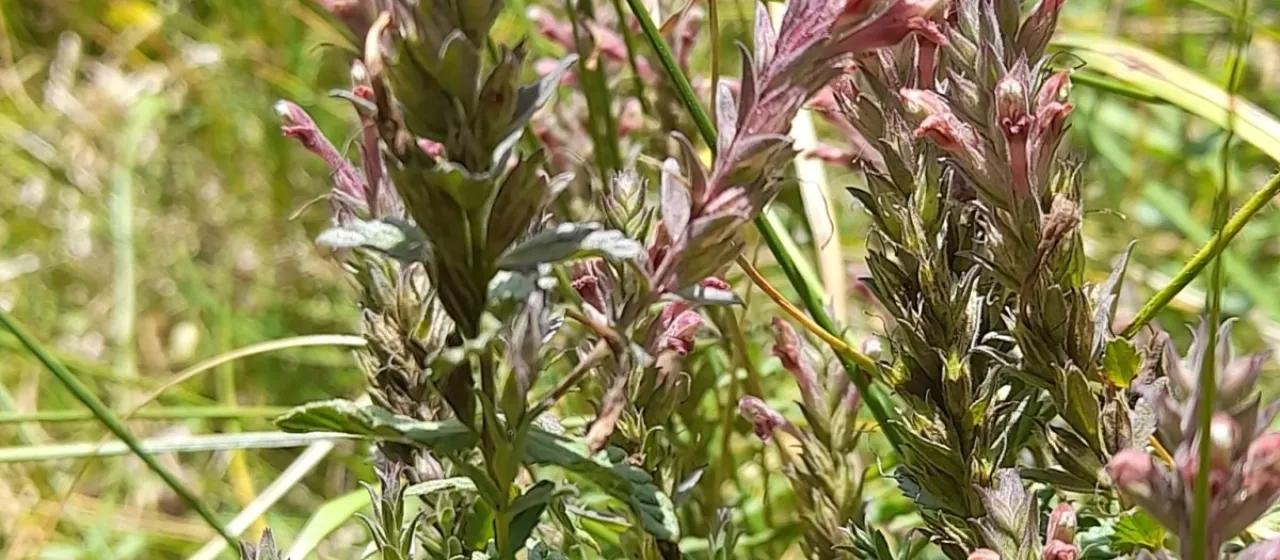
Description
Nothobartsia spicata is a herbaceous annual plant belonging to the Orobanchaceae family. It is a distinctive species known for its hemiparasitic nature, meaning it can perform photosynthesis while simultaneously tapping into the roots of host plants to derive water and minerals, which is a common evolutionary strategy within its family.
The plant is native to the Mediterranean basin and parts of Southern Europe. Its natural habitat includes open meadows and sunny hillsides where it can easily access appropriate host plants. Because of its specific biological requirements, the plant is typically found in wild populations rather than commercial agricultural environments, making it a subject of ecological rather than industrial interest.
Botanically, it features a rigid, upright stem adorned with opposite leaves. The name spicata refers to its characteristic spike-like inflorescence, which produces small flowers during the growing season. The plant's root system is specialized, forming haustoria that penetrate the tissues of neighbouring plants to facilitate the transfer of nutrients, which allows it to thrive in nutrient-poor environments.
Regarding agrotechnical requirements, Nothobartsia spicata demands a well-draining soil profile with a neutral to slightly alkaline pH. In controlled settings or botanical trials, success depends heavily on the presence of a compatible host plant. Moisture management is critical; overwatering can lead to rapid decay of the delicate haustorial connections, undermining the plant's ability to survive.
The plant has limited commercial application and is generally not grown as a crop. Instead, it is valued in biological research for its parasitic interactions and evolutionary adaptation. Typical pests and diseases include those commonly affecting the Orobanchaceae family, such as fungal pathogens resulting from high humidity and various sucking insects that may exploit the plant's nutrient-rich sap. Maintaining ecological balance is essential for its health.