
Description
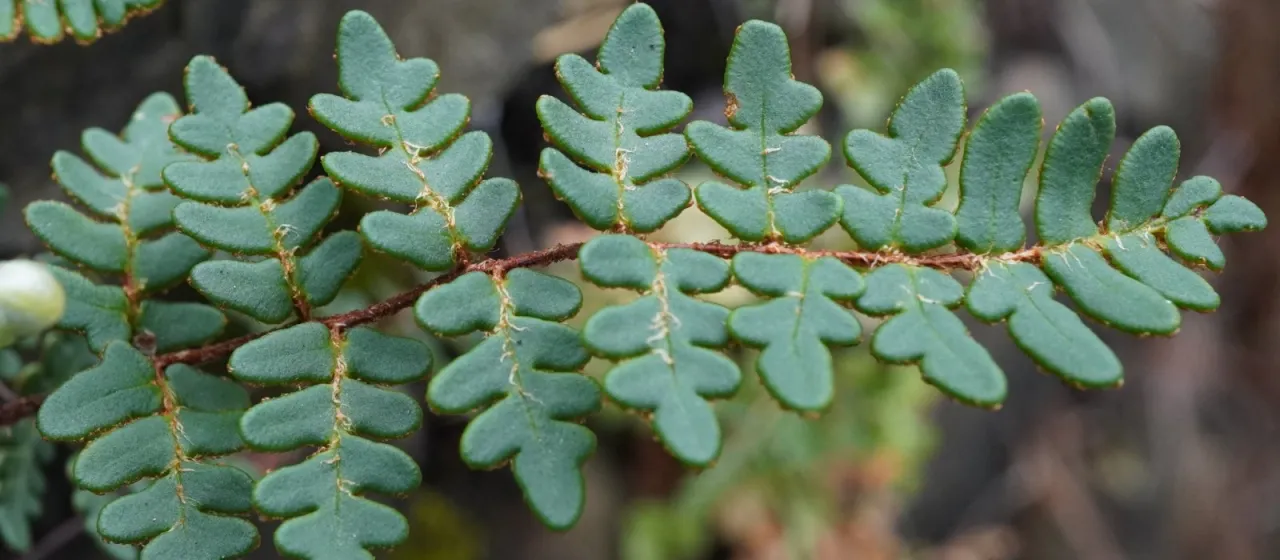
Notholaena marantae, commonly known as a rock fern, belongs to the family Pteridaceae. It is a distinctive xerophytic species that has adapted to harsh, arid environments, distinguishing it from the typical moisture-loving ferns often found in tropical or temperate forest understories.
The native range of this species spans the Mediterranean basin, parts of the Caucasus, and regional segments of Africa and Asia. It thrives in rocky crevices and cliff faces where soil volume is minimal. This adaptation allows the plant to exploit niches that are generally unsuitable for many other plant species due to water scarcity and exposure to high temperatures.
The plant's botanical structure includes short, creeping rhizomes and coriaceous (leathery) fronds. A key feature of its biology is the presence of scale-like structures on the underside of the leaves. These scales provide protection against desiccation and solar radiation, allowing the plant to remain dormant or hydrated during intermittent dry periods.
Cultivation requirements demand a focus on mimicking its natural rocky habitat. Key practices include:
- Using highly porous, mineral-based soil mixes.
- Ensuring excellent drainage to prevent crown and root rot.
- Maintaining moderate light exposure without intense midday heat.
- Allowing the substrate to dry out significantly between watering sessions.
Regarding its utility, the plant is primarily used by botanical enthusiasts and horticulturists in specialized rock garden displays and alpine house collections. Disease management focuses on preventing water-related pathogens, as the plant is highly susceptible to root decay. Common pests include scale insects and mealybugs, which are often managed through careful monitoring and manual removal.