
Description
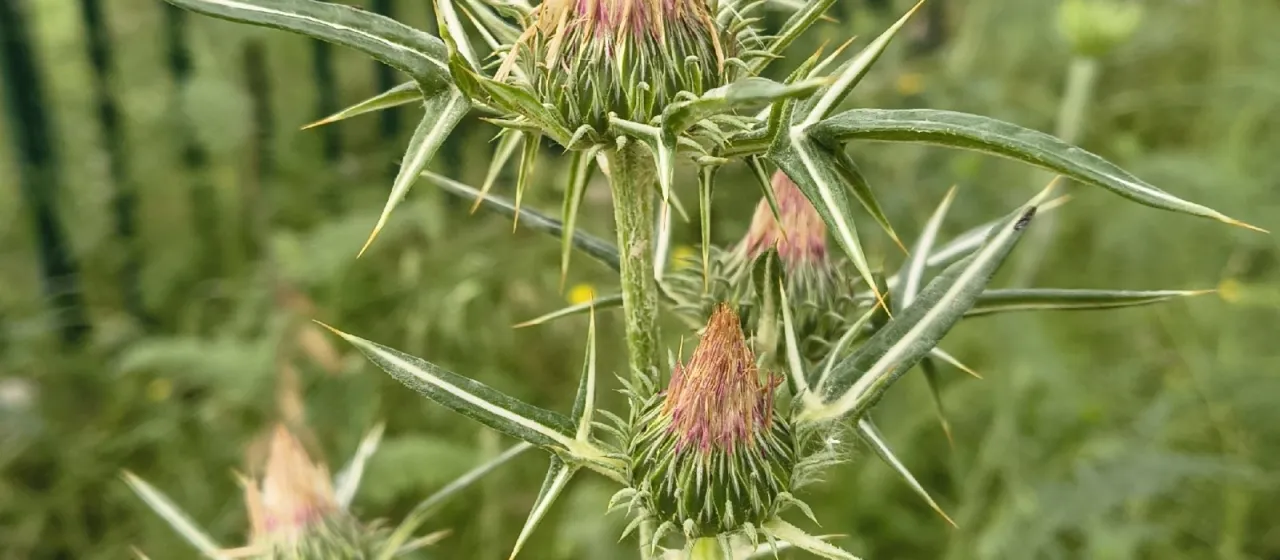
Syrian thistle (Latin: Notobasis syriaca) is an annual herbaceous plant belonging to the Asteraceae family. In agriculture, it is recognized primarily as a widespread weed that thrives in disturbed soils and cultivated areas, competing aggressively with crops for essential resources like moisture, sunlight, and soil nutrients.
Native to the Mediterranean Basin, the Near East, and parts of Western Asia, this species has successfully naturalized in various regions globally. It is commonly found in pastures, along roadsides, and in fallow fields, where its ability to adapt to arid and semi-arid conditions allows it to dominate other vegetation.
Botanically, Notobasis syriaca is characterized by its prickly, pinnatifid leaves and stems that can grow up to 1.5 meters in height. The plant features distinctive purple or pink flower heads surrounded by sharp, spine-tipped bracts. This structure serves as a defensive mechanism against herbivores, making it difficult for livestock to graze near the plant.
The plant thrives in well-drained, sunny environments and is highly drought-tolerant. Effective agronomic control requires a combination of strategies, including:
- Regular mechanical mowing before the seed-setting stage.
- Deep tillage to prevent the establishment of the taproot system.
- Selective chemical application using herbicides suitable for broadleaf weed management.
While the Syrian thistle is often viewed as a nuisance, its resilience remains a subject of scientific interest regarding phytochemical research. However, in standard farming operations, it is considered a threat to yield and biodiversity, requiring consistent monitoring and integrated pest management practices to maintain soil and crop health.