
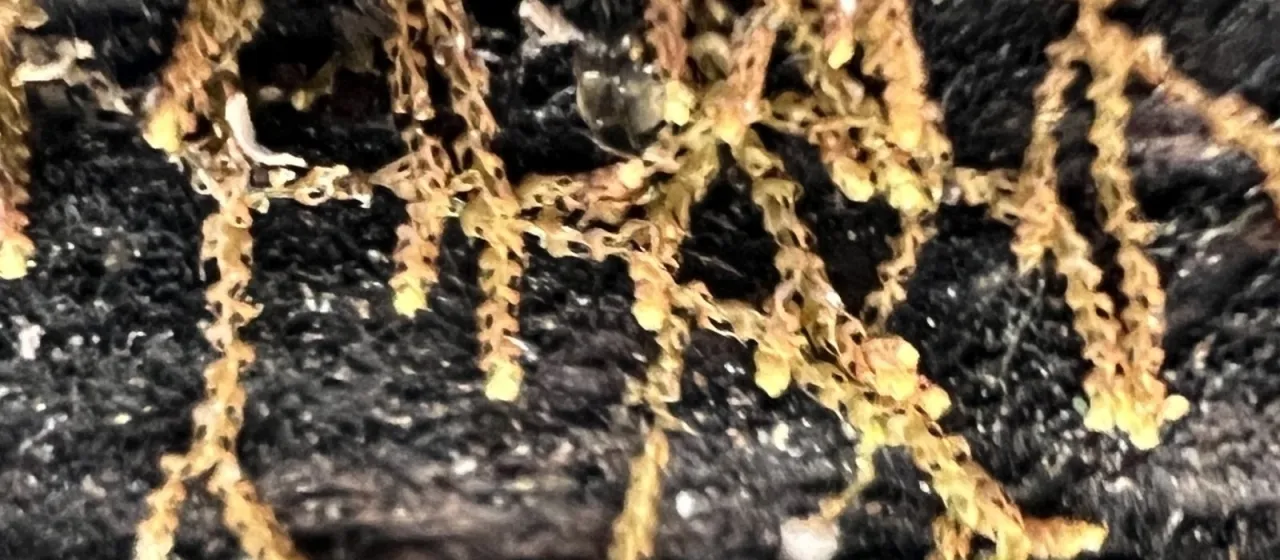
Description
Nowellia curvifolia is a species of liverwort belonging to the family Cephaloziaceae. While it is not classified as a conventional agricultural crop, it is a subject of significant interest in bryology and forest ecology due to its specialized role in decaying wood habitats.
The species is native to the temperate zones of the Northern Hemisphere, including extensive parts of Europe, North America, and Asia. It is strictly dependent on specific forest conditions, flourishing primarily in habitats where old-growth forests provide a consistent supply of decaying logs and high atmospheric humidity.
Botanically, this liverwort is distinguished by its tiny, curved, hook-like leaves that form delicate mats on woody substrates. Its appearance is often described as thread-like, and it displays varying shades of green, reddish-brown, or bronze depending on its exposure to light and the moisture levels of the environment.
The cultivation or management of this species is not feasible in an agricultural context. It requires highly specific micro-climatic conditions: a cool, shaded environment with a stable, humid atmosphere and a pH-neutral to acidic decaying wooden substrate. Artificial propagation outside of a laboratory or botanical setting is exceptionally difficult.
In terms of practical use, it serves as an essential bioindicator for ecologists monitoring the continuity and health of forest ecosystems. The presence of this liverwort suggests that the forest has retained enough deadwood to support specialized biodiversity. It is not prone to traditional agricultural pests or diseases but is highly sensitive to habitat disturbance.
- Requires rotting logs for colonization.
- Highly sensitive to air pollution.
- Plays a role in early-stage forest decay processes.
- Lacks commercial value as a crop.