
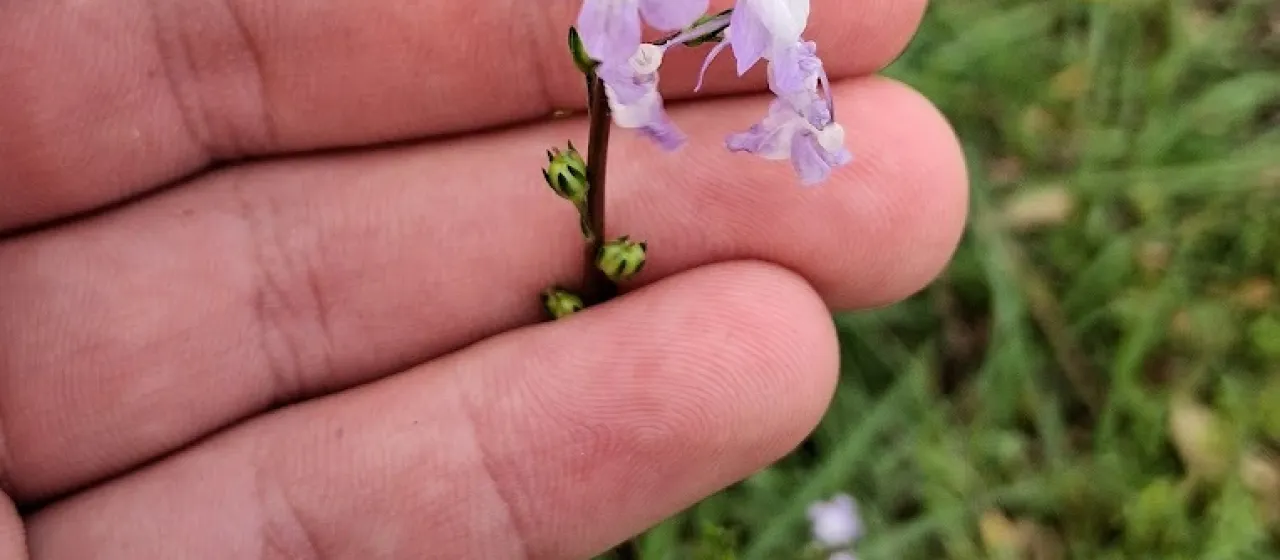
Description
Blue toadflax (Nuttallanthus canadensis) is an annual or biennial herbaceous plant belonging to the family Plantaginaceae. Previously identified within the genus Linaria, it was reclassified to the genus Nuttallanthus due to specific genetic and morphological differences. It is a resilient species often recognized by its delicate, spurred flowers that thrive in diverse environmental conditions.
The native distribution of blue toadflax is primarily concentrated in North America, spanning various regions from Canada to Mexico. Over time, it has become naturalized in various parts of the globe, often colonizing sandy or disturbed habitats, such as fallow fields, roadsides, and meadows. In agricultural terms, it is frequently managed as a wild species that can appear in cultivated fields depending on soil quality and disturbance levels.
Botanically, the plant grows to a height of 10 to 50 centimeters, featuring slender stems and alternate, linear-shaped leaves. Its most distinctive feature is the terminal raceme of small, pale-blue to violet flowers, each equipped with a prominent spur. The plant develops a relatively shallow root system, making it well-suited for sandy or nutrient-poor substrates where competition from larger, deeper-rooted flora is limited.
From an agronomical standpoint, blue toadflax is drought-tolerant and prefers well-drained, acidic to neutral soils. It does not require intensive fertilization and often succeeds in marginal land. Management practices in an agricultural setting include:
- Mechanical tillage prior to seed dispersal.
- Crop rotation to break the life cycle of opportunistic weeds.
- Application of broadleaf herbicides if the infestation compromises crop yield.
While blue toadflax does not hold significant status as a major crop, it is recognized for its role in soil stabilization and as a nectar source for pollinators. The plant is occasionally susceptible to standard fungal issues such as powdery mildew, especially in humid conditions, and may host minor sap-sucking insects. Despite this, it remains a persistent species that adapts effectively to various agricultural landscapes.