
Description
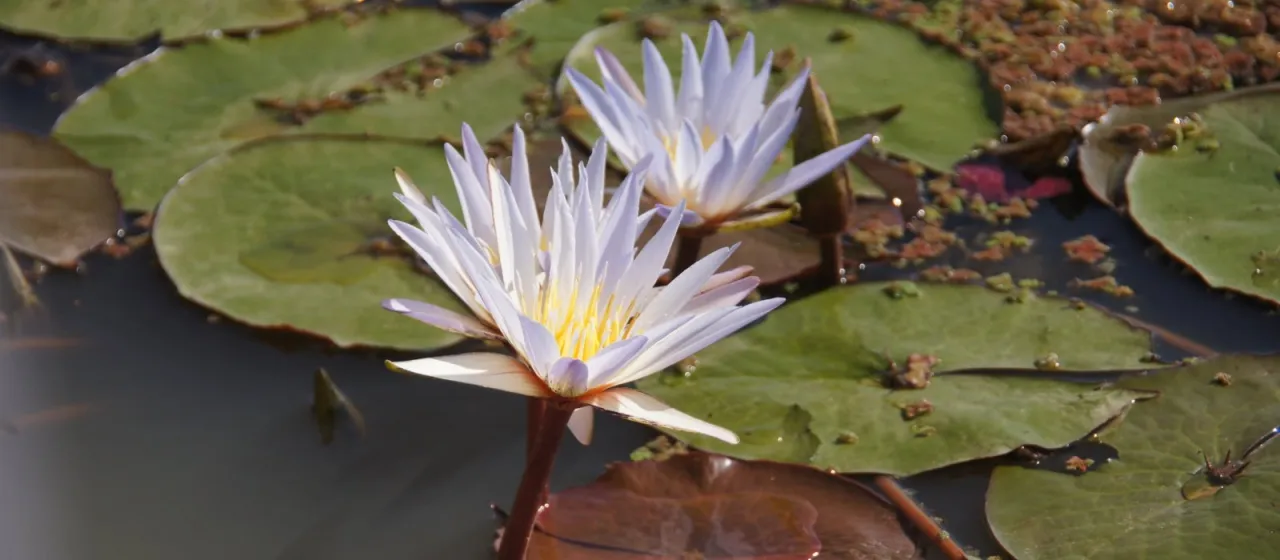
Guinean water lily (lat. Nymphaea guineensis) is a perennial aquatic herbaceous plant belonging to the family Nymphaeaceae. As a specific member of the Nymphaea genus, this species is well-known for its adaptation to tropical aquatic environments, featuring unique biological mechanisms that sustain its growth in high-temperature settings.
The plant is native to the tropical regions of West Africa, typically inhabiting stagnant or slow-moving freshwater ecosystems. Because of its tropical origin, it requires a stable, warm climate for successful development. In cultivation, it is widely recognized as a species that demands careful protection from cold weather, making it suitable for greenhouses or tropical water features where temperature can be strictly regulated.
Botanically, Nymphaea guineensis is characterized by its floating foliage and distinctive flowers. The plant relies on a submerged rhizome system, which anchors it into the muddy substrate of its environment. The leaves are adapted for efficient gas exchange and photosynthesis, allowing the plant to thrive in the typically low-light conditions of deeper, murky waters when necessary, although it prefers high light exposure.
Cultivation practices for this species require precise management of water chemistry and nutrient levels. The ideal substrate is a nutrient-rich mixture of heavy clay, organic matter, and sand. Growers must ensure that the water temperature remains within the +24°C to +28°C range. Due to its vigorous growth habit, frequent division and repotting of the rhizomes are necessary to maintain plant health and prevent overcrowding in containers.
The primary economic and aesthetic use of this plant is in the landscape industry, particularly for high-end aquatic garden designs and botanical collections. While not used for large-scale agriculture, it is a significant species for local biodiversity. Common phytosanitary challenges include fungal infections related to poor water circulation and infestation by common aquatic pests, such as aphids or water lilies beetles.
- Maintain a consistent water temperature above +22°C.
- Use enriched clay-based substrates for optimal root nutrition.
- Provide at least 10 hours of natural or artificial light per day.
- Implement preventative measures against fungal pathogens in stagnant water.