
Description
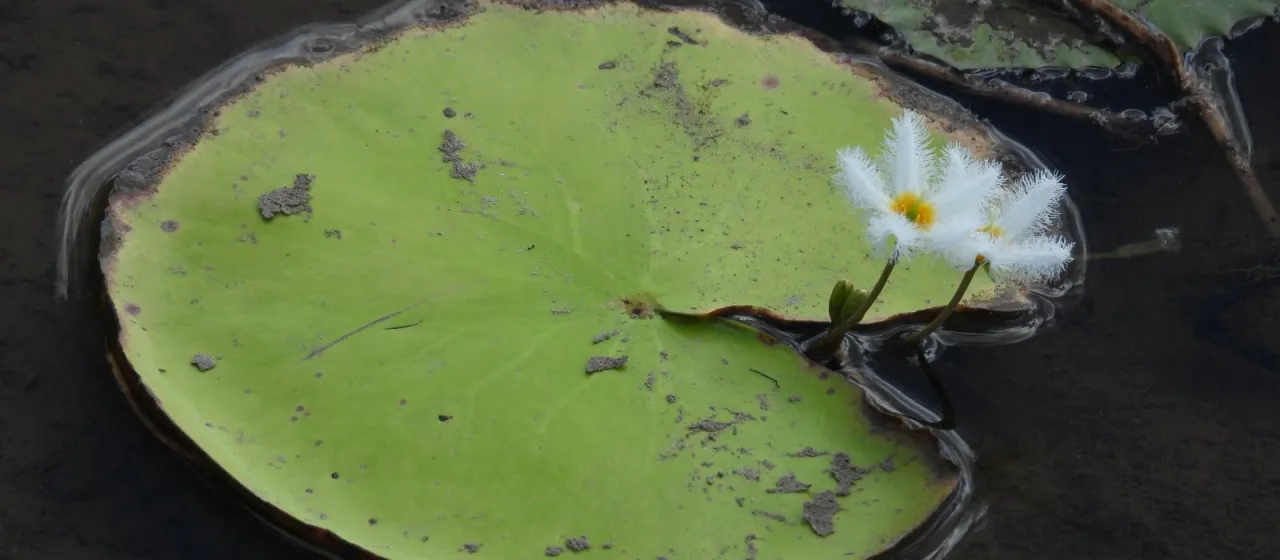
Nymphoides indica, commonly known as the Water snowflake, is a perennial aquatic plant belonging to the Menyanthaceae family. While it visually mimics the appearance of a water lily with its floating, heart-shaped leaves, it possesses a unique biological structure that distinguishes it from the Nymphaeaceae family.
The plant is native to tropical regions of Asia, Africa, and Australia, where it thrives in stagnant waters, swamps, and flooded areas. Its adaptability to diverse tropical climates has made it a favorite species for both hobbyist aquarists and landscape designers who manage artificial water gardens in temperate or warm regions.
Botanically, the Water snowflake is characterized by its floating foliage and unique inflorescences. Each petiole supports a single leaf and a cluster of delicate, fringed white flowers that bloom directly beneath or near the leaf surface. The root system is efficient at absorbing nutrients from bottom sediments, supporting rapid surface colonization.
Cultivation requirements involve high light intensity and stable water temperatures ranging from 20°C to 28°C. The substrate should be nutrient-rich, ideally composed of a mixture of silt, peat, and organic matter. Proper agrotechnical management requires preventing overcrowding, as the plant can quickly cover the water surface, potentially depleting oxygen levels if not thinned periodically.
Regarding its хозяйственное use, Nymphoides indica is primarily utilized for its aesthetic value in ornamental aquatic displays. In some Asian traditional practices, specific parts of the plant are utilized in local cuisine after appropriate thermal processing. Common threats include fungal infections resulting from poor water circulation and herbivory by snails or insect larvae, which often require integrated pest management strategies to maintain the health of the plant.