
Description
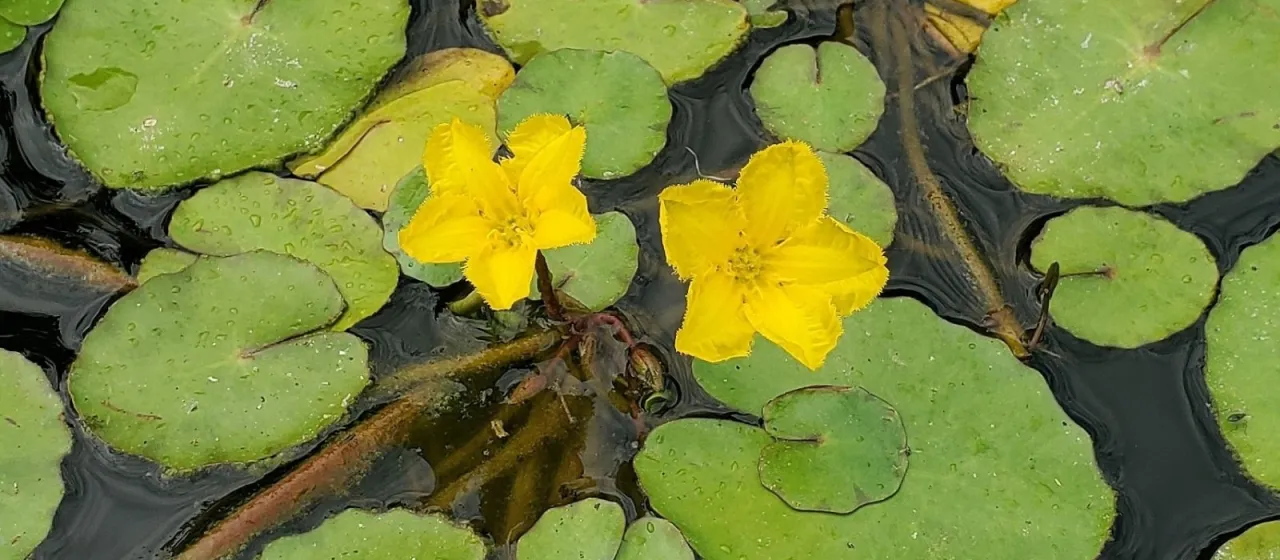
The yellow floating heart (Nymphoides peltata) is a perennial aquatic plant belonging to the Menyanthaceae family. It is a rhizomatous macrophyte that roots in the substrate of water bodies while its heart-shaped leaves and bright yellow flowers float elegantly on the water surface, providing shade and shelter for aquatic fauna.
Native to temperate regions of Eurasia, this plant thrives in calm, stagnant, or slow-moving waters such as ponds, lakes, and canals. Due to its rapid growth rate, it has been widely introduced into various aquatic environments worldwide, often becoming a focal point in water gardening projects thanks to its visual appeal.
Botanically, Nymphoides peltata is characterized by its long stems that rise from the rhizomes to reach the surface. The leaves are peltate (the stalk attaches to the center or near the center of the underside), and the flowers feature five petals with distinct fringed margins. The plant blooms consistently throughout the summer months under adequate sunlight.
Cultivation requirements involve ensuring water depths ranging from 30 cm to 100 cm and access to rich, silty sediments. As part of pond maintenance, it is essential to monitor the plant's growth, as it can quickly spread to cover the entire surface, potentially causing oxygen depletion if the pond is not properly managed or aerated.
In terms of хозяйственное usage, the yellow floating heart is highly valued for ornamental purposes and biological water purification. It acts as a nutrient sink, absorbing excess nitrates and phosphates from the water column. Its dense leaf canopy also helps regulate water temperature by shading the deeper layers of the pond.
Pests and diseases include common aquatic herbivores such as leaf-feeding beetles (Galerucella nymphaeae) and aphid infestations during warm periods. To maintain plant health, it is recommended to physically remove damaged leaves and ensure sufficient water movement to prevent the development of fungal spores on the floating foliage.