
Description
The Nypa palm (Nypa fruticans Wurmb) is a unique species of palm belonging to the monotypic genus Nypa in the Arecaceae family. Unlike most of its relatives, this palm is a quintessential representative of mangrove ecosystems, specifically adapted to life in the tidal zones of tropical coastlines. It is widely regarded as the only palm species that has successfully adapted to the brackish conditions of salt marshes and river estuaries.
The native range of the plant spans the tropical regions of the Indo-Pacific basin. Today, its cultivation range covers South and Southeast Asia, including Indonesia, the Philippines, Malaysia, and parts of northern Australia. The Nypa palm thrives in soft, silt-rich soils and requires regular exposure to saline or brackish water, making it a critical component of coastal resilience and biodiversity.
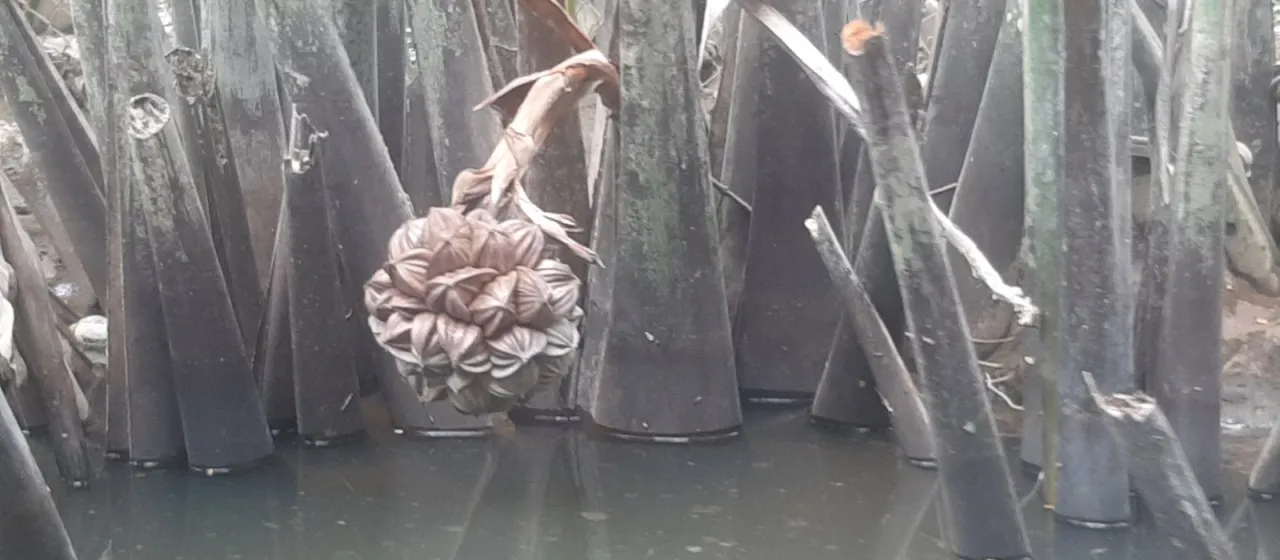
Botanically, the Nypa palm is distinct because its stem (rhizome) grows horizontally beneath the soil, with only its massive pinnate leaves, reaching up to 9 meters in length, visible above ground. Its unique structure includes a robust root system that effectively filters salt and stabilizes the substrate, playing a major role in preventing coastal erosion. Its inflorescences are spherical flower heads that develop into large clusters of fibrous drupes.
Agronomically, the Nypa palm requires minimal human intervention, as it excels in its natural habitat of mangrove swamps. The primary requirement is a stable hydrological regime with regular tidal flooding. Propagation occurs mainly through seeds that are dispersed by water currents. Commercial harvesting typically involves the sustainable management of wild stands, with monitoring for pests such as weevils and various larvae that can damage the apical meristem or growing points.
- Sap harvesting for sugar, vinegar, and bioethanol production.
- Use of leaves for traditional thatching and weaving materials.
- Consumption of young fruits (edible endosperm) as food.
- Coastal soil stabilization and erosion prevention.
The economic utility of the Nypa palm is immense for coastal communities. Its sap, tapped from the flower stalk, is a valuable source of sugar, vinegar, and renewable bioethanol. Beyond its liquid products, the Nypa provides essential raw materials for construction and crafts, such as high-quality thatching for roofs and durable fibers for weaving. Its role as both an ecological engineer and a resource-rich crop ensures its long-term significance in sustainable tropical agriculture.