
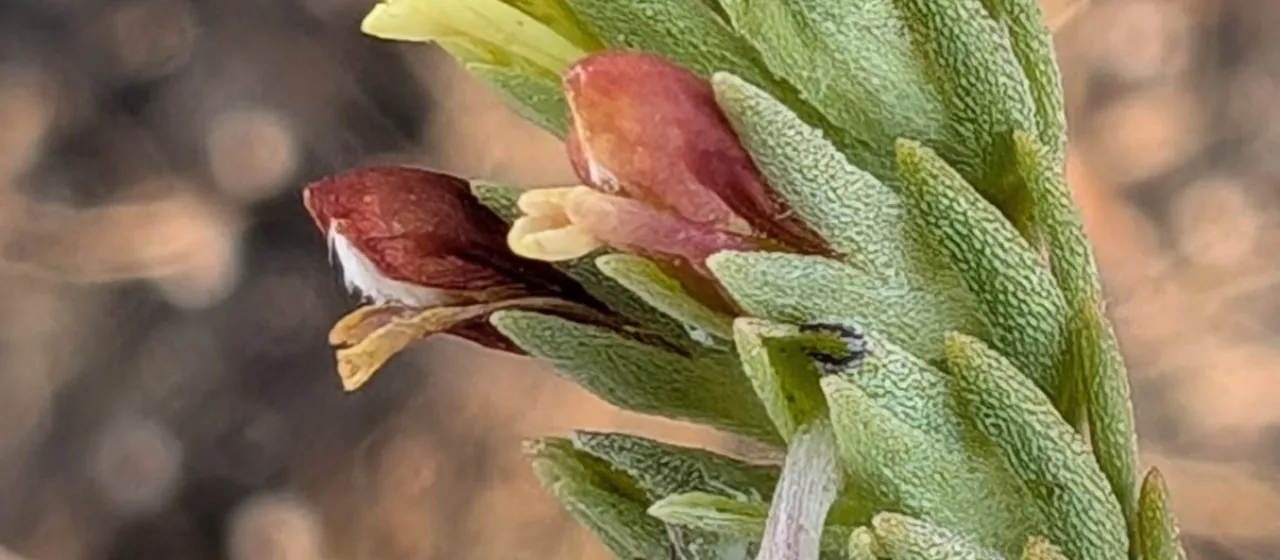
Description
Odontitella virgata is a specialized herbaceous plant species belonging to the Orobanchaceae family. It is a hemiparasite, meaning that while it is capable of photosynthesis through its green foliage, it relies on haustorial connections to the root systems of host plants to supplement its supply of water and mineral nutrients. This physiological strategy allows it to survive in nutrient-poor environments where other plants might struggle.
The geographic distribution of this species is primarily centered across parts of Central and Southern Europe. It thrives in open, sun-exposed habitats such as dry meadows, steppe grasslands, and rocky slopes. Because it requires specific soil conditions and the presence of suitable hosts, its distribution is often fragmented, leading to its status as a rare or protected species in various botanical regions.
Botanically, Odontitella virgata is characterized by its slender, erect, and highly branched stem, which provides the inspiration for its specific epithet virgata, meaning "twiggy" or "rod-like." Its leaves are opposite and linear, and its small, tubular flowers appear in terminal, spike-like racemes during the summer months. The plant's overall morphology is highly adapted to wind pollination and dry, exposed landscapes.
In terms of agricultural practice, this species is not considered a cultivated crop. It does not possess traits desired for forage or commercial production. In some contexts, hemiparasitic plants are viewed as pests in pasture management; however, Odontitella virgata is typically restricted to wild meadows and does not pose a significant risk to high-yield industrial farming operations.
Conservation is the primary focus regarding this plant. As an integral part of stable steppe ecosystems, it serves as a marker for ecological health. Typical challenges for the species include:
- Loss of habitat due to land conversion for agriculture.
- Overgrazing or total abandonment of traditional mowing practices.
- The application of herbicides in bordering agricultural zones.