
Description
Odontocarya (Odontocarya tamoides) is a perennial woody vine belonging to the Menispermaceae family. This plant is a typical inhabitant of tropical and subtropical environments, utilizing its climbing habit to navigate dense forest canopies in search of sunlight.
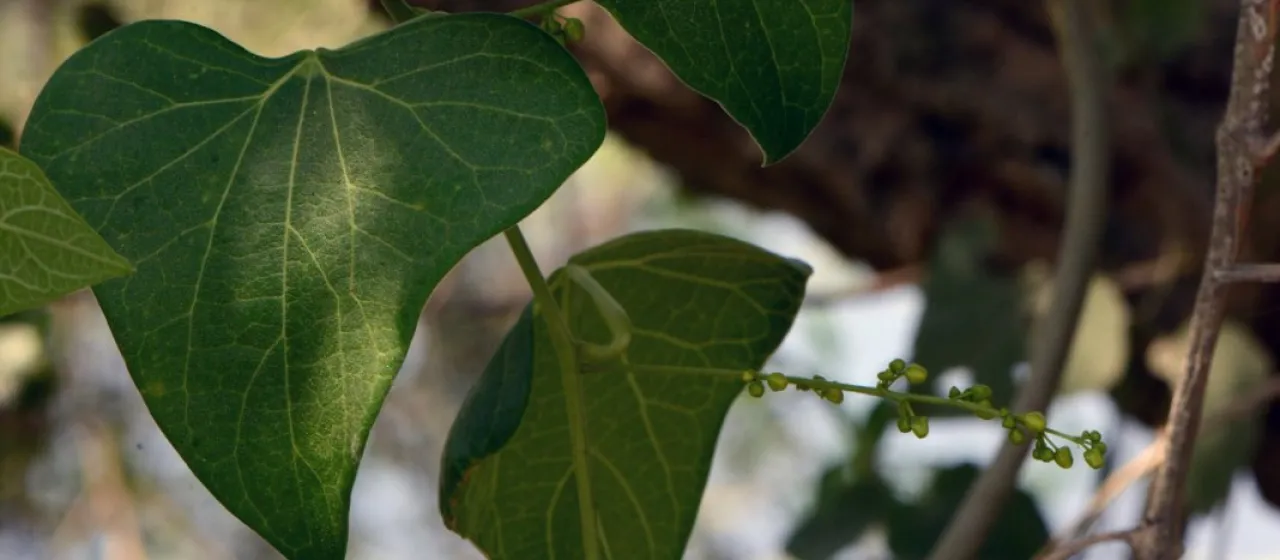
Botanically, the plant is characterized by its twining stems and alternate, often cordate-shaped leaves. The morphology of the species allows it to thrive as a climber, with small, inconspicuous flowers typically organized in inflorescences, adapted for pollination in humid forest environments.
The natural range of the plant is primarily concentrated in the tropical zones of the Americas. It is commonly found in rainforest understories where moisture levels remain consistently high and temperatures do not fluctuate drastically throughout the year.
In terms of cultivation, Odontocarya tamoides requires well-drained, nutrient-rich soil and a tropical climate with high humidity. It is sensitive to waterlogging and freezing temperatures. Successful cultivation relies on providing sufficient structural support for its climbing stems and maintaining consistent moisture levels in the root zone.
Economic and research utility of the species is centered on its ethnobotanical history. Researchers examine the plant for its unique secondary metabolites, specifically alkaloids, which have implications for drug development. While not a commercial staple crop, it remains a valuable subject for pharmaceutical and biological studies.
- Family: Menispermaceae
- Growth habit: Climbing woody vine
- Habitat: Tropical forests
- Propagation: Seeds and cuttings
- Utilization: Potential medicinal source