
Description
Oedipodium griffithianum is a remarkable species of moss that represents the sole member of the Oedipodiaceae family. While it is not a cultivated agricultural crop, it remains a subject of intense scientific interest among botanists and bryologists, offering insights into the adaptation of plants to cold-climate environments.
The species has a scattered arctic-alpine distribution, primarily found in the Northern Hemisphere. It thrives in rugged, high-latitude environments such as parts of Scotland, Scandinavia, Greenland, and North America. It is typically associated with nutrient-poor, rocky substrates and habitats that experience prolonged cold and high humidity.
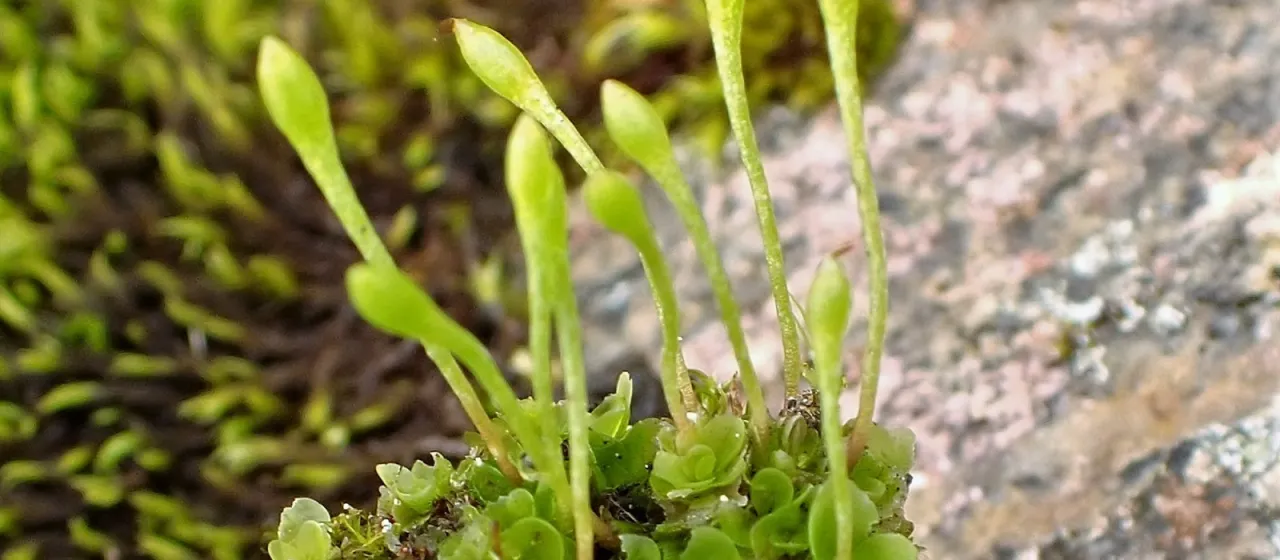
Botanically, Oedipodium griffithianum is characterized by its specific morphology, featuring a distinctive stalked sporophyte and compact, leaf-covered stems. Its life cycle is strictly synchronized with the short, cool growing seasons of mountainous or arctic terrains, allowing it to complete reproduction when moisture availability is optimal.
In terms of ecological requirements, this moss is highly specialized. It requires specific moisture regimes and cold temperatures to survive, making it ill-suited for any form of agricultural cultivation or human-controlled propagation. It serves as a natural colonizer of primary rock surfaces, playing a minor but important role in early soil formation in its native habitats.
The plant faces significant threats primarily from climatic shifts, including rising temperatures and altered precipitation patterns in its native alpine ranges. There are no reported diseases or pests that affect this species in an agricultural sense, but its populations are extremely sensitive to disturbance, trampling, and atmospheric changes that impact its fragile ecosystem.