
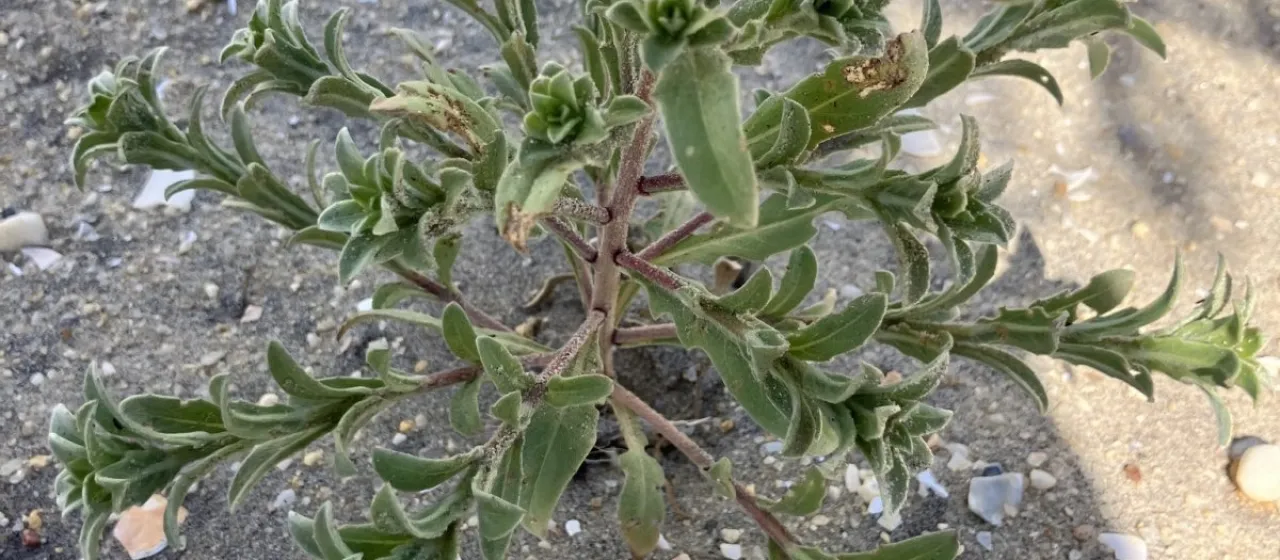
Description
Seaside Evening Primrose (Oenothera humifusa) is a perennial herbaceous plant belonging to the Onagraceae family. Unlike standard garden evening primroses, this species is a specialized psammophyte, evolutionarily engineered to thrive in the harsh, high-salinity environments of coastal dunes.
The native range of this plant is restricted to the Atlantic coast of North America. It is a key ecological component of dune ecosystems, where it plays a critical role in stabilizing shifting sands. The plant's ability to withstand salt spray and intense coastal winds makes it an interesting subject for coastal management studies.
Botanically, Oenothera humifusa is characterized by a prostrate or trailing growth habit. Its stems spread along the sand surface, while its foliage is typically covered in fine, grayish hairs to reduce transpiration. The flowers are bright yellow and exhibit the characteristic evening-opening behavior seen in the genus, which aids in attracting nocturnal moth pollinators.
For cultivation, the species requires specific environmental conditions. It demands well-drained, sandy soil with very low organic matter content. Drainage is the most critical factor for success; the plant will not survive in heavy, moisture-retaining soils or environments with stagnant water. It thrives in full, direct sunlight and requires very little maintenance once established.
The primary economic and practical use of this plant is in coastal conservation and landscape restoration. It is used to anchor dunes and stabilize erosion-prone sandy soils.
- Disease resistance: naturally resistant to salt-induced stress.
- Pests: prone to spider mites in hot, dry conditions.
- Maintenance: no fertilization needed in native sandy environments.