
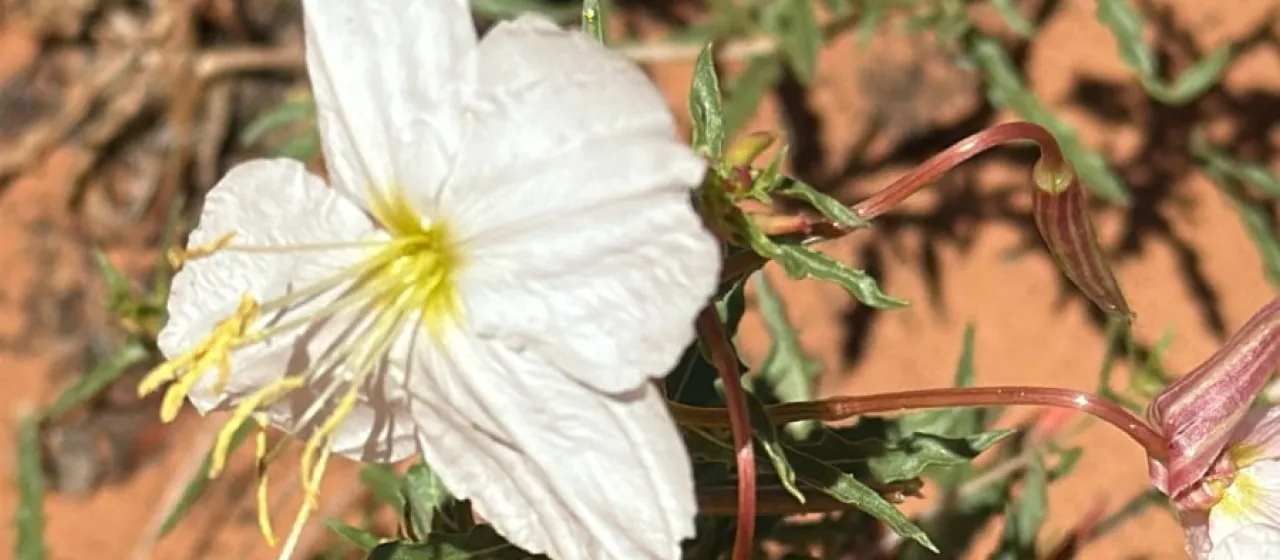
Description
The pale evening primrose (Oenothera pallida) is a perennial herbaceous plant belonging to the Onagraceae family. Known for its resilience, this species has adapted to survive in harsh, arid environments, making it a subject of interest for specialized horticulture, xeriscaping, and soil stabilization projects in dry climates.
The species originates from the western regions of North America, where it typically inhabits sandy soils, dunes, and open rocky terrain. This geographic background has dictated its evolutionary development, resulting in a deep, drought-resistant root system that allows the plant to thrive even when moisture levels in the upper soil layers are extremely low.
Botanically, Oenothera pallida is characterized by its slender, often trailing stems and lanceolate foliage. Its most notable feature is the large, white, fragrant flowers that open at night. This nocturnal flowering strategy is an adaptation to attract specialized pollinators, providing essential ecological support for local moth populations and other night-flying insects.
Agronomic requirements for this crop focus primarily on drainage and light exposure. It performs best in poor, sandy, or gravely soils where water moves freely. Excessive moisture, especially during the dormant season, is detrimental and often leads to root rot. Providing full sun is essential for robust growth and optimal floral production; shaded areas significantly reduce the plant's health and vigor.
The economic and landscaping utility of Oenothera pallida is significant for low-maintenance garden designs. When maintaining this crop, growers should be aware of the following potential issues:
- Root and crown rot caused by poor soil drainage.
- Aphid infestations during the spring growth phase.
- Competition from invasive weeds if the site is not cleared before planting.
- Leaf spot pathogens that occur during periods of uncharacteristic high humidity.