
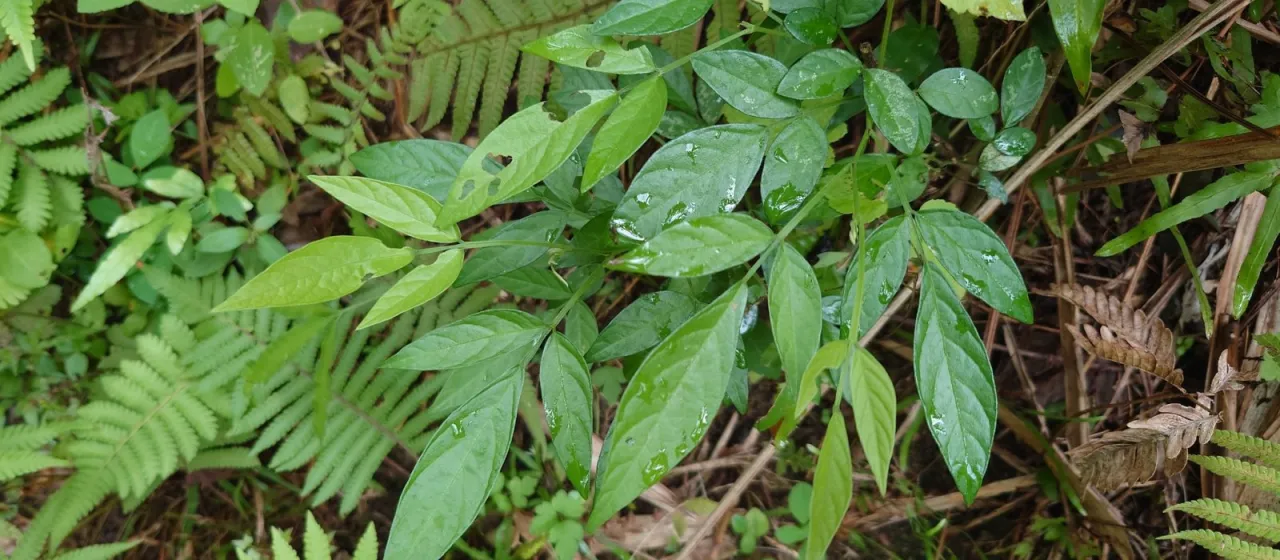
Description
Ohwia caudata is a perennial shrub belonging to the Fabaceae family. Formerly classified within the genus Desmodium, this plant is notable for its vigorous growth and its potential as an nitrogen-fixing species. It represents a significant interest in modern agro-ecology, especially in regions where leguminous crops are used for soil health restoration and biomass production.
The plant originates from Southeast Asia, with its natural habitat spanning across countries like China, Japan, and Vietnam. It thrives in tropical and subtropical climatic zones where the growing season is long and temperatures remain relatively stable. It is typically found in sunny clearings, slopes, and forest margins where it can benefit from warm temperatures and adequate moisture levels.
Morphologically, Ohwia caudata is characterized by stiff, upright stems and distinct trifoliate leaves, often ending in a characteristic elongated point. The flowers are typically purple or pink, forming panicles that add to the plant's aesthetic value. Its root system is robust, allowing the plant to reach deep-seated soil moisture and nutrients, which contributes to its resilience in fluctuating environmental conditions.
Cultivation requires fertile, well-draining soils with a pH level between neutral and slightly acidic. The plant is sensitive to frost and waterlogging, making proper field selection crucial for success. Agronomic management involves consistent irrigation during dry spells and the application of fertilizers high in phosphorus and potassium to boost reproductive development and yield potential during the flowering stage.
The practical applications of Ohwia caudata are diverse and impactful:
- Usage as a green manure crop to enhance soil structure and fertility.
- Provision of high-protein forage for livestock in agricultural settings.
- Integration into ornamental landscaping for its unique structure and flowers.
- Promotion of pollinator biodiversity due to its high nectar-producing capacity.
Regarding health management, the crop is susceptible to fungal infections such as root rot, particularly in poorly ventilated areas with excessive moisture. Common pests include various mites and insects that target leguminous foliage. Effective pest control involves balanced monitoring, proper spacing to ensure air circulation, and the judicious use of biopesticides to maintain healthy crop development throughout the season.