
Description
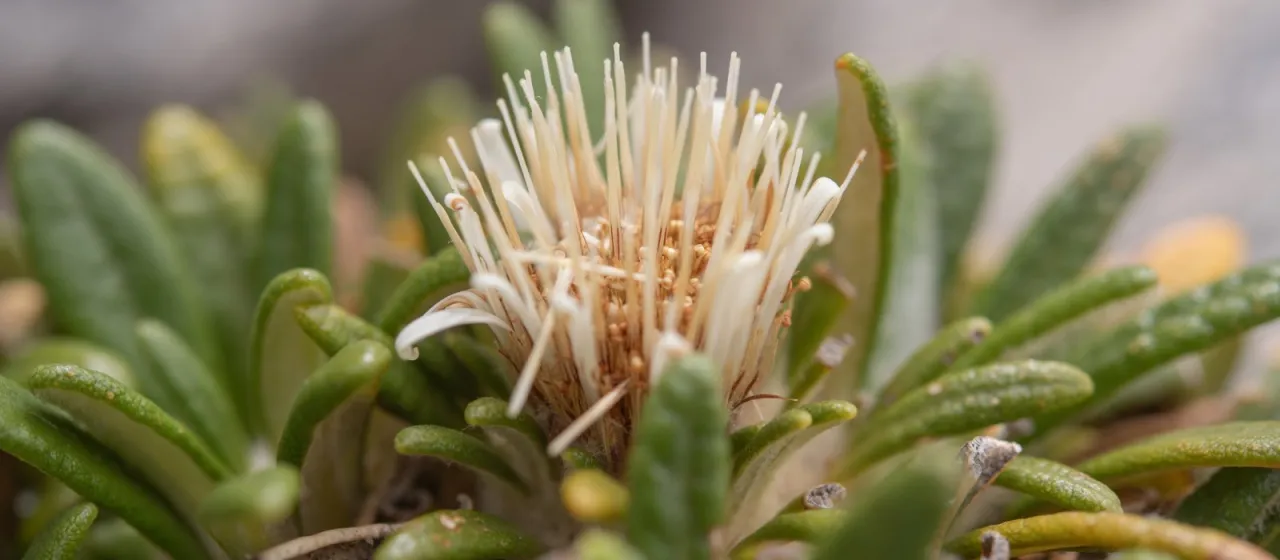
Oldenburgia paradoxa is a distinctive evergreen shrub belonging to the Asteraceae family. Known for its robust, architectural form and striking, thistle-like inflorescences, this plant is considered a botanical gem. It is characterized by its woody stems and dense terminal leaf rosettes that provide a unique visual impact in specialized gardening.
The species originates from the mountainous regions of the Western Cape in South Africa. Its natural habitat consists of rocky, nutrient-poor slopes, where it has adapted to survive strong winds and seasonal drought. This adaptation makes it a fascinating subject for studies on xerophytic plants and specialized ornamental horticulture.
Botanically, the plant features leathery, often silver-backed leaves that serve as a moisture-retaining mechanism. The inflorescences are large, complex capitula that bloom atop the rosettes. Because of its slow growth habit, it is often kept in collections by enthusiasts of rare and endangered flora, valuing its structural elegance over rapid production metrics.
Cultivation requirements demand a focus on sharp drainage and mineral-rich, slightly acidic soil. Unlike standard garden crops, it thrives in environments that mimic its natural mountain slope conditions: high light intensity, excellent airflow, and strictly controlled irrigation. Water management is critical, as root rot is a major threat in stagnant soil conditions.
While primarily of ornamental and academic interest rather than broad-scale agriculture, it requires careful pest management. Typical issues include:
- Fungal pathogens triggered by excessive humidity.
- Spider mites during low-humidity or indoor cultivation.
- Mealybugs affecting the dense leaf bases.
Regular inspection and maintaining an environment with proper air circulation are the best preventative measures against these common stressors.