Oldenlandia diffusa
Oldenlandia diffusa (Willd.) Roxb.
Description
Oldenlandia diffusa (Willd.) Roxb. is an herbaceous annual belonging to the Rubiaceae family. Widely recognized in traditional Asian herbal medicine as Hedyotis diffusa, this plant is increasingly cultivated for its pharmacological potential. It is valued primarily for its bioactive compounds, which are extracted from the aerial parts of the plant during the flowering stage.
The native range of this species covers tropical and subtropical regions of Asia, including China, India, and Vietnam. It naturally thrives in moist, open habitats such as rice paddies, wetlands, and along stream banks. Successful agricultural production depends on replicating these warm, humid conditions, making it an excellent candidate for controlled environment agriculture or specific wetland farming setups.
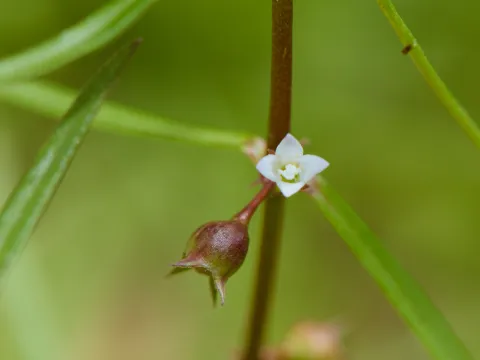
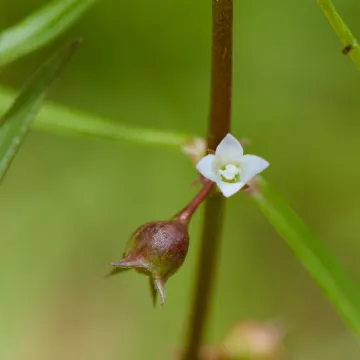
The plant exhibits a diffuse, prostrate growth habit with slender, quadrangular stems that may root at the nodes. The leaves are small, lanceolate, and arranged in opposite pairs, while the flowers are solitary, white, and relatively inconspicuous. Due to its shallow root system, the plant requires consistent moisture management to reach its full yield potential.
When it comes to agronomic requirements, Oldenlandia diffusa prefers well-drained, fertile, loamy soils with slightly acidic to neutral pH. Proper soil preparation is essential, as the seeds are small and sensitive to crusting. Farmers should prioritize weed control in the early growth stages, as the plant is a poor competitor against faster-growing weeds. Fertilization should focus on organic nitrogen to support lush foliage development.
Common issues in cultivation include fungal diseases like root rot and powdery mildew, often triggered by poor ventilation or excessive stagnant water. Integrated pest management (IPM) is recommended, focusing on the use of biological controls for aphids and mites. The ultimate harvest is usually processed through rapid drying to preserve the chemical integrity of its medicinal compounds, which is the primary goal of its commercial cultivation.
Photo gallery