
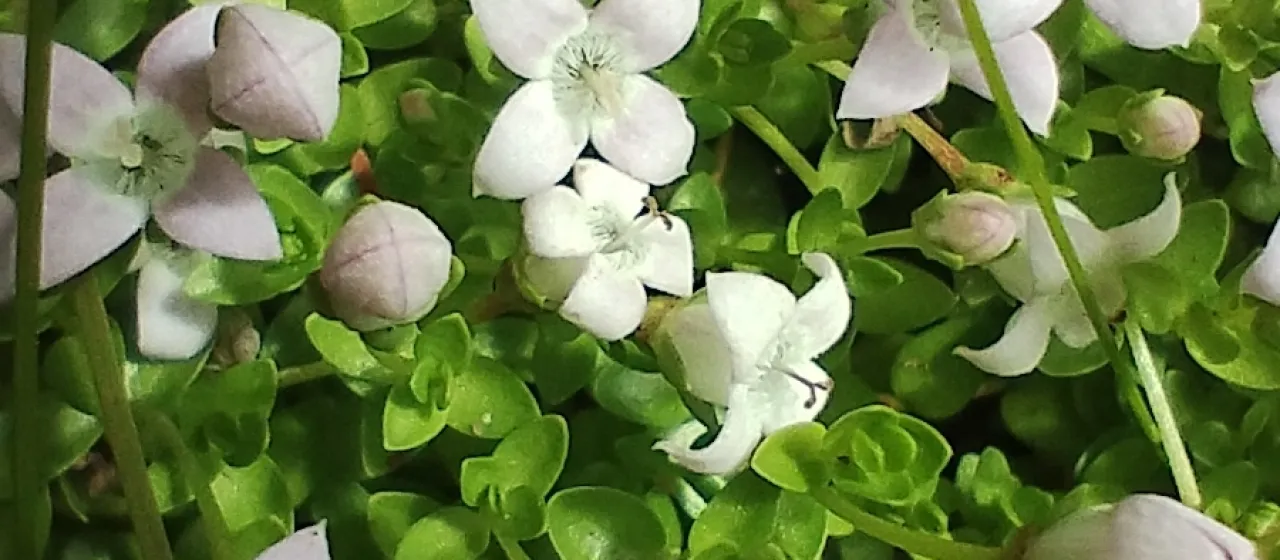
Description
Oldenlandia salzmannii is a perennial herbaceous plant belonging to the Rubiaceae family. This species is recognized for its unique adaptation to both amphibious and aquatic environments, making it a distinct subject of study within tropical botany and horticulture.
The plant originates from the tropical regions of South America, specifically Brazil. Its natural habitat is characterized by damp, waterlogged areas, riverbanks, and seasonal wetlands. This evolution allows the species to survive in environments where fluctuating water levels are a constant factor, influencing its morphology and physiological resilience.
Botanically, Oldenlandia salzmannii features delicate, branching stems with lanceolate leaves arranged in opposite pairs. The plant's ability to undergo phenotypic plasticity is remarkable; when exposed to high-intensity lighting in submerged conditions, the foliage often displays reddish or vibrant green tones, enhancing its aesthetic appeal.
Regarding agronomic requirements, the culture demands a nutrient-rich, acidic substrate and stable water parameters. It thrives in temperatures between 20°C and 28°C. For successful propagation, consistent carbon dioxide supplementation and soft water are recommended. High-quality lighting is essential to prevent etiolation and to promote vigorous branching of the stems.
The plant is primarily utilized in ornamental horticulture and aquascaping. It serves as an excellent mid-ground or background plant in aquatic displays. While generally robust, the species can be susceptible to fungal or bacterial pathogens if the water circulation is poor or if there is an excess of accumulated organic waste. Maintaining clean substrate and stable water chemistry are the best methods to ensure healthy growth.