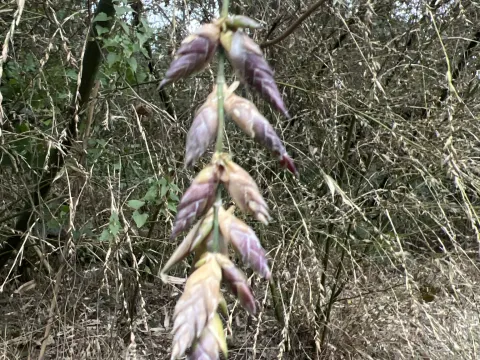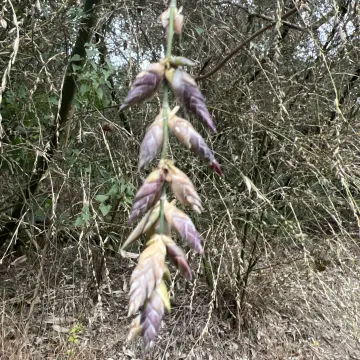
Oldham's bamboo
Bambusa oldhamii Munro
Description
Oldham's bamboo (Bambusa oldhamii Munro) is a giant clumping bamboo species belonging to the Poaceae family. It is highly valued in horticulture and agriculture for its imposing stature, rapid growth rate, and structural strength, making it one of the most common timber bamboos in tropical and subtropical regions worldwide.
Native to Taiwan and parts of Southern China, this species has been successfully introduced to various regions including Australia, the United States, and parts of Europe. It is well-adapted to diverse environments, provided the climate remains frost-free or experiences only mild, short-lived winter temperatures.
Botanically, Bambusa oldhamii is characterized by its upright, densely packed culms that can reach heights of up to 20 meters. The culms are smooth, dark green, and possess thick, strong walls. The foliage is lush and broad, which makes it an excellent choice for windbreaks, privacy screens, and ornamental landscaping purposes.
Agricultural success depends on providing fertile, well-draining soil and consistent moisture. While the plant is drought-tolerant once established, optimal growth occurs in high-rainfall areas or under controlled irrigation. Soil pH should ideally range from neutral to slightly acidic, and regular mulching is recommended to retain soil moisture and provide essential nutrients.
The economic and practical applications of this bamboo species are extensive and include the following:
- Commercial production of edible bamboo shoots, which are popular for their tender texture and mild flavor.
- Timber production for furniture manufacturing, garden construction, and crafting sustainable building materials.
- Landscape management and erosion control, as the clumping root system helps stabilize soil on slopes.
The plant is relatively resistant to major diseases, although it can occasionally be affected by bamboo mites or scale insects. Effective management involves maintaining a clean planting site, removing dead or damaged culms to improve airflow, and monitoring for pests during periods of high humidity to prevent secondary fungal infections.
Photo gallery