Description
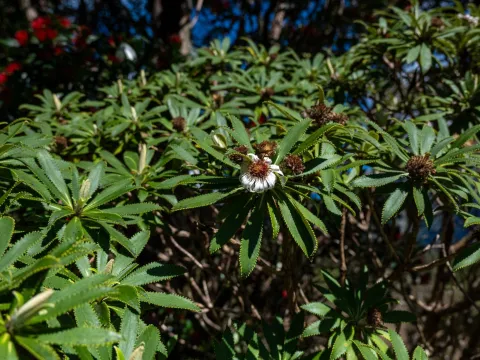
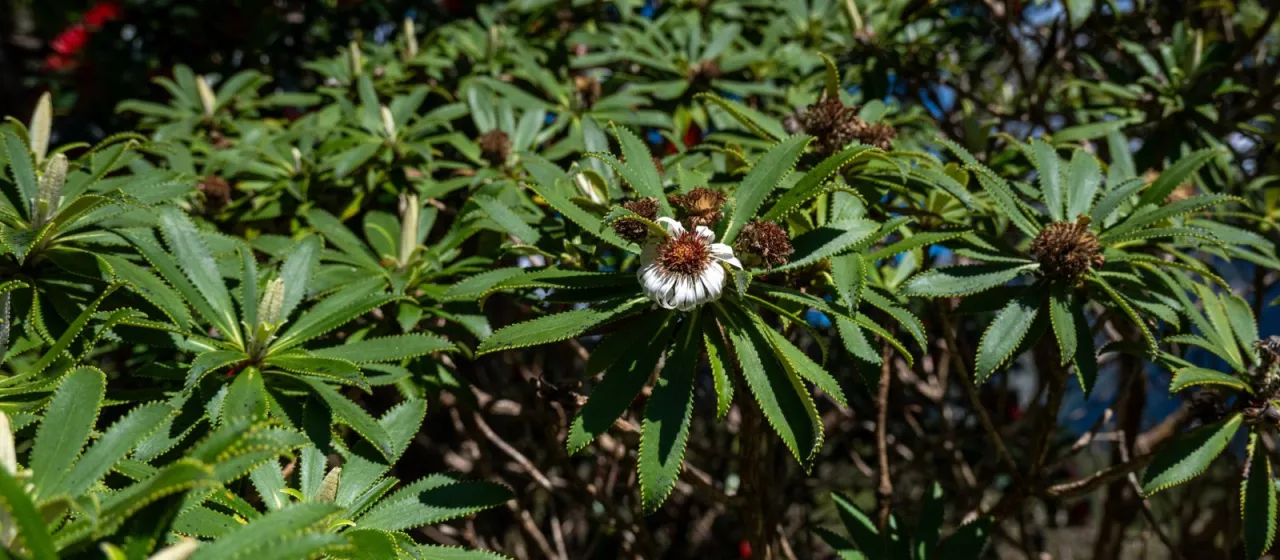
Titi-aute, scientifically known as Olearia angustifolia, is an evergreen ornamental shrub belonging to the Asteraceae family. Renowned for its unique aesthetic, this species is a standout in temperate gardens, prized for its ability to maintain dense foliage throughout the seasons while producing attractive, daisy-like floral displays.
The species is native to New Zealand, primarily found in the coastal regions of Stewart Island. It is naturally adapted to high-moisture environments and cool maritime climates, often thriving in areas where salt-laden winds are common, which makes it a resilient choice for specific coastal planting scenarios.
Botanically, the plant is characterized by long, narrow, leathery leaves with a dense, white-to-buff tomentum on the undersides. This physiological adaptation helps the plant manage transpiration. The inflorescences are distinct composite heads with white ray florets surrounding a vibrant, yellow disc center, blooming predominantly in the late spring and summer months.
Cultivation requirements for Olearia angustifolia include a preference for well-drained, fertile soil with a slightly acidic to neutral pH. It performs best in full sun but requires protection from severe frost and drying winds in its younger stages. A consistent irrigation schedule is vital during the establishment phase to ensure deep root penetration.
While relatively hardy, the plant can face challenges from common pests such as aphids and spider mites, particularly in stagnant, humid environments. Fungal diseases, including root rot, can occur if the planting site lacks proper drainage. Regular light pruning after flowering helps maintain a dense, compact habit and promotes vigorous growth in the subsequent season.
Photo gallery