
Description
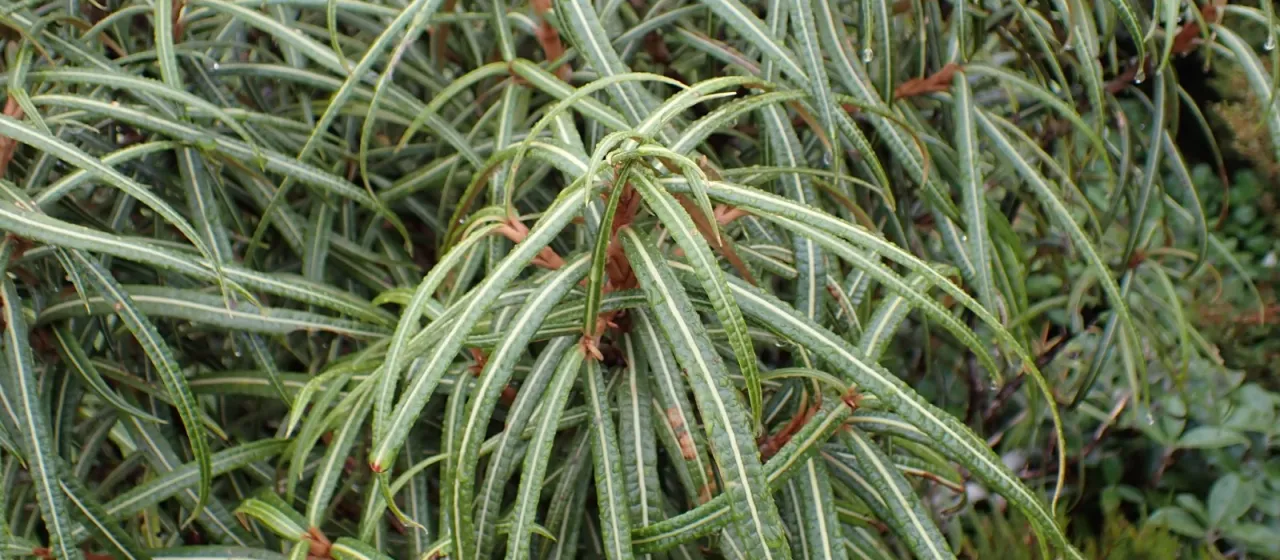
Olearia lacunosa is an evergreen shrub belonging to the Asteraceae family. Known for its distinct appearance, this plant is characterized by its robust structure and unique foliage, making it a distinctive specimen for gardens that favor native-style or exotic plant collections.
Originating from New Zealand, the species is primarily found in the subalpine regions of the South Island. Its native environment is characterized by cool temperatures, varying light conditions, and well-drained soils, which are critical factors to replicate when cultivating this shrub in a horticultural or domestic setting.
Botanically, Olearia lacunosa is recognized by its long, narrow, and leathery leaves. The underside of these leaves is covered with a thick, brownish or white indumentum, providing an attractive texture. The flowers form small, daisy-like heads typical of the Asteraceae family, usually appearing as white or creamy clusters during the blooming season.
Cultivation requirements involve providing well-draining soil, as the plant is highly susceptible to root rot in waterlogged conditions. It thrives best in cooler climates with moderate sunlight. Pruning should be carried out carefully after the flowering period to maintain a dense, compact shape and to encourage new growth for the subsequent season.
The primary horticultural and landscape applications for this species include:
- Serving as a structural element in shrub borders.
- Providing winter interest in coastal and cool-climate gardens.
- Creating protective hedging in sheltered outdoor areas.
- Incorporating into rock garden designs where soil drainage is optimal.
Typical pest and disease issues include fungal infections when air circulation is poor, and occasional infestations of spider mites or aphids during dry spells. Proper site selection, which ensures adequate spacing between plants and appropriate soil moisture levels, remains the most effective strategy for managing the health of Olearia lacunosa.