Description
Olearia rani, widely known in its native New Zealand as "heke," is a species of evergreen shrub or small tree belonging to the family Asteraceae. It naturally inhabits diverse environments ranging from lowland coastal forests to mid-altitude mountain slopes. This woody plant is highly valued for its dense habit and distinctive foliage, making it a staple in temperate ornamental landscapes.
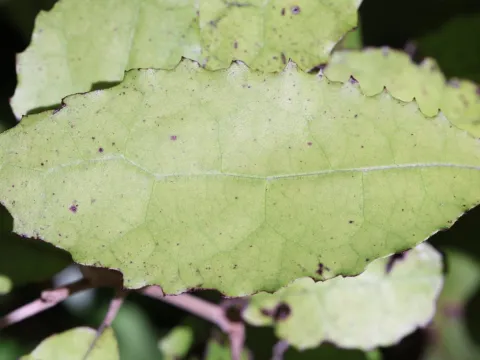
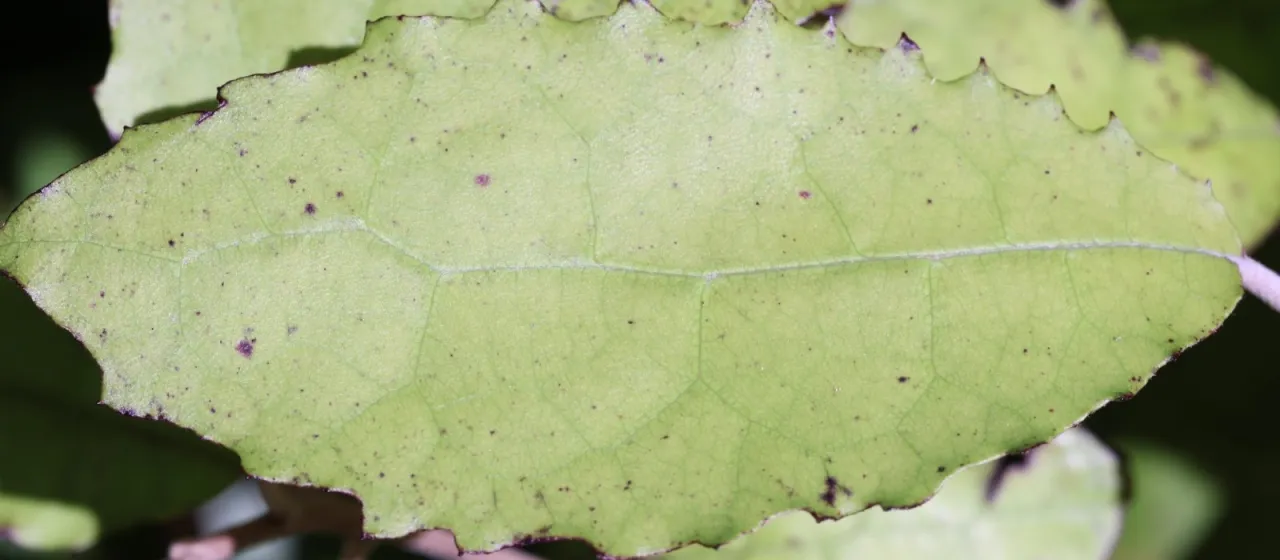
The botanical characteristics of this shrub are defined by its leathery, elliptical leaves. These leaves feature a notable dimorphism: the upper surface is dark green and glossy, while the underside is densely covered with white to silvery tomentum (hairs). This unique appearance creates a shimmering effect in windy conditions. The plant produces large corymbs of small, daisy-like white florets that emerge during late spring and summer.
Regarding climate and soil requirements, Olearia rani thrives in environments with consistent rainfall and mild temperatures. It is not fully frost-hardy and requires a sheltered position if grown in colder zones. The plant demands well-drained, fertile soil that does not hold excess water. Acidic to neutral soil conditions are preferred, and heavy clay soils must be amended with organic matter to improve aeration.
Agrotechnical practices involve regular pruning to maintain an attractive shape and prevent the shrub from becoming too "leggy." Fertilization should be applied sparingly, usually in the form of a balanced slow-release fertilizer during the active growing season. Propagation is most successful via semi-hardwood cuttings taken during the late summer months, ensuring that the cuttings are kept in a humid environment to promote rooting.
Maintaining plant health requires vigilance against common issues and pests:
- Powdery mildew can occur if air circulation is insufficient within the dense foliage.
- Aphids and scale insects often target young growth during the spring season.
- Root rot can develop if the soil remains waterlogged for prolonged periods.
- Leaf spot diseases might appear if the plant is stressed by lack of sunlight or nutrition.
Photo gallery