
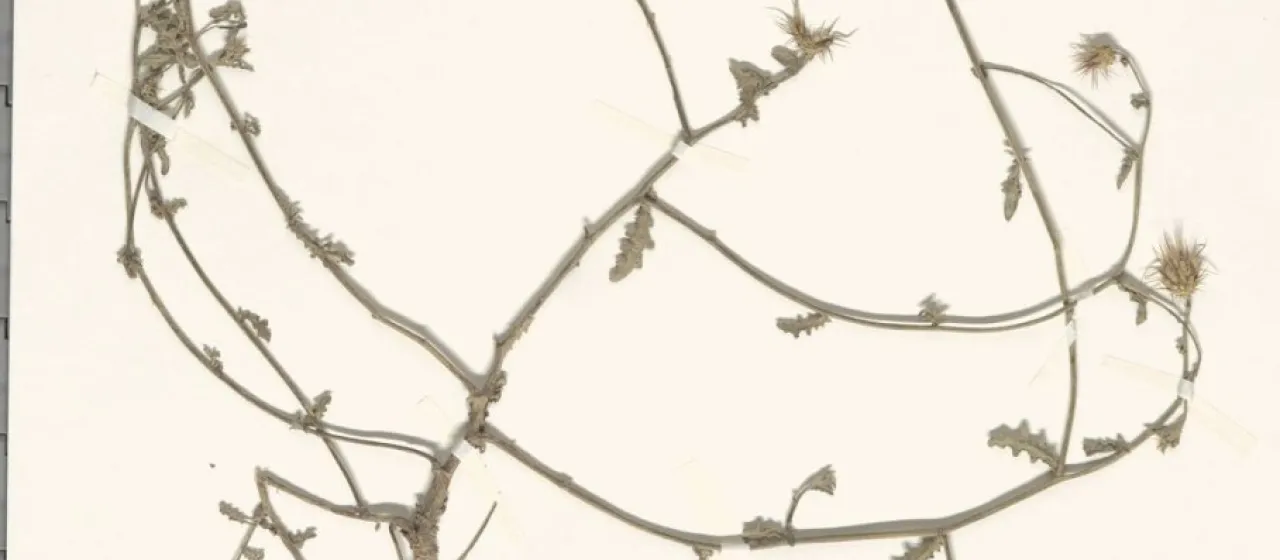
Description
Oligochaeta ramosa is a perennial herbaceous plant belonging to the Asteraceae family. Known in specific agricultural contexts for its role in land restoration, this species is highly valued for its resilience in difficult environments and its structural contribution to soil stabilization in erosion-prone areas.
The origin of the species is linked to the mountain and plateau regions of Eurasia. Its cultivation area has expanded as practitioners recognize its potential for reclaiming degraded lands. It thrives in regions where climate extremes, such as harsh winters and dry summers, limit the success of more sensitive commercial crops.
Botanical traits include a robust taproot system and characteristic branching stems that promote dense vegetative cover. The leaves are typically lanceolate and pubescent, serving as a survival adaptation to reduce water loss through transpiration, which allows the plant to remain productive under high solar radiation and low soil moisture.
Agronomic requirements emphasize the need for well-drained, porous soils. Oligochaeta ramosa performs best in neutral to slightly alkaline pH environments. Optimal cultivation involves careful weed management during the establishment phase and ensuring adequate spacing between plants to prevent the spread of soil-borne pathogens in the root zone.
- Application of potassium-based fertilizers enhances drought resistance.
- Mechanical cultivation of inter-rows is recommended for aeration.
- Harvesting efficiency depends on weather conditions during seed maturation.
In terms of хозяйственное (economic) use, the plant is primarily employed for soil conservation projects, acting as a biological barrier against erosion. Furthermore, its ability to integrate organic matter into the soil profile over time makes it a valuable species for improving the productivity of fallow land through natural succession processes.
Pest and disease management involves monitoring for fungal pathogens that may appear in humid conditions, as well as managing aphid populations. A proactive approach using integrated pest management (IPM) strategies, including biological control agents and crop rotation, remains the most effective method for maintaining the health of the field.