
Description
Smilo grass (lat. Oloptum miliaceum) is a robust perennial bunchgrass belonging to the Poaceae family. Formerly known as Piptatherum miliaceum, this species is highly valued in dryland agriculture. It is recognized for its ability to thrive in challenging environments where other cool-season grasses fail to produce sufficient biomass.
The native distribution of Smilo grass includes the Mediterranean basin, the Middle East, and parts of North Africa. Over time, it has been introduced to various other Mediterranean-climate regions worldwide, such as California, South Australia, and South America. Its ecological plasticity allows it to colonize disturbed sites, which highlights its role in soil stabilization and erosion control.
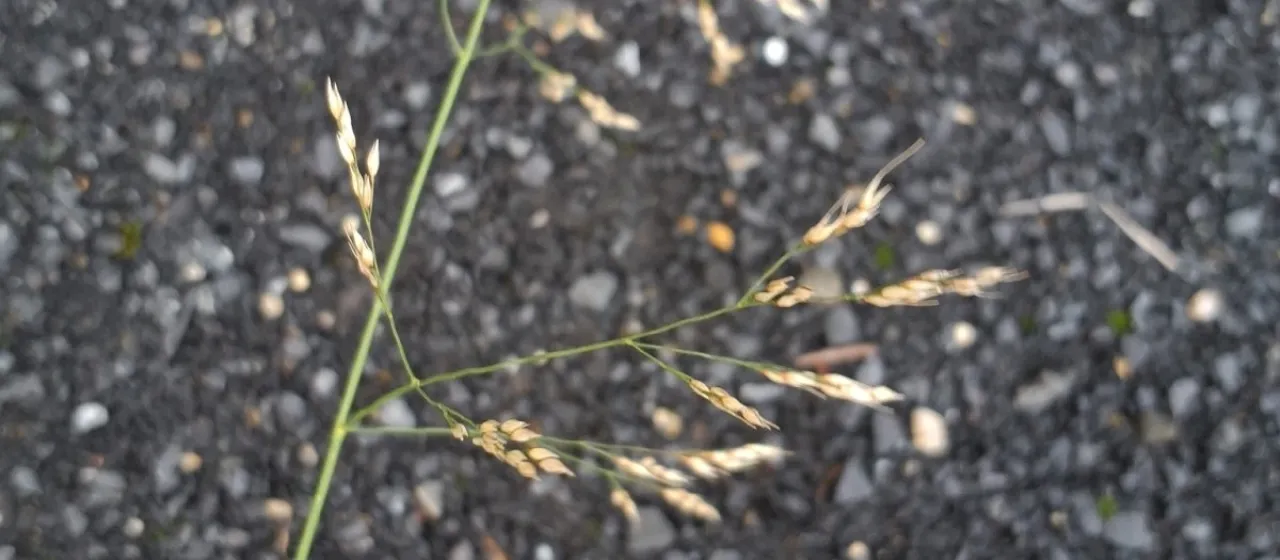
Botanically, this grass forms dense tufts with narrow, rigid leaves. The inflorescence is a large, spreading panicle that resembles a millet head, which is why it earned its common name. The plant typically reaches heights of 1 to 1.5 meters. It possesses a deep-reaching root system, enabling it to access moisture from lower soil horizons during prolonged dry summer months.
Regarding cultivation, Smilo grass performs best in well-drained, fertile soils but displays impressive tolerance to gravelly and rocky substrates. It is a sun-loving plant that does not tolerate heavy shade. Standard agronomic practices involve drilling seeds into a firm seedbed in autumn or early spring. Due to the small seed size, shallow planting is critical to ensure high germination rates and uniform emergence.
The primary economic use of Smilo grass is as a forage crop for grazing livestock, including cattle, sheep, and goats. It remains green during the late spring and early summer, providing high-quality feed when other annual grasses have dried out. Beyond animal production, it is often utilized in land reclamation projects to stabilize slopes and restore degraded grasslands in arid and semi-arid zones.
- Excellent drought tolerance and heat resistance.
- Nutritionally balanced forage for livestock.
- Strong root system prevents soil erosion.
- Longevity in managed pasture systems.
- High biomass production in winter and spring.
While the plant is generally hardy, it can be susceptible to fungal diseases such as rust or leaf spot if moisture levels remain excessively high for extended periods. Pests such as aphids may congregate on developing seed heads, but they rarely threaten the overall survival of the stand. Good management, including strategic grazing and avoiding over-irrigation, is the most effective way to maintain plant health and productivity.