
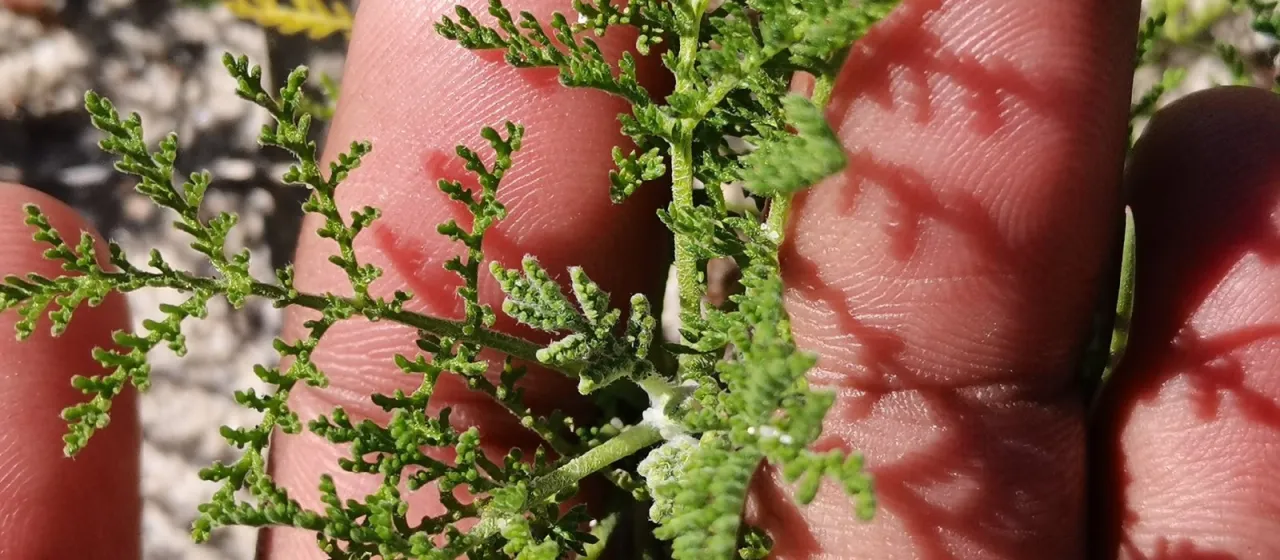
Description
Oncosiphon suffruticosus is a perennial herb or subshrub species belonging to the Asteraceae family. Known for its distinct aromatic profile and resilience, this plant is primarily studied for its adaptation to semi-arid and arid environments, making it a subject of interest in specialized botanical research and niche agriculture.
The native distribution of this plant is centered in Southern Africa, where it has evolved to thrive in dry, rocky, and sandy terrains. Its evolutionary history has made it highly dependent on high solar radiation and low soil moisture, allowing it to occupy ecological niches where more sensitive crops would fail to establish.
Botanically, the species is characterized by its woody base, complex branching patterns, and finely divided, feathery foliage. The inflorescences consist of small composite flower heads that typically appear during the period of moisture availability. Its structural complexity helps in minimizing transpiration, which is a key survival strategy in harsh climates.
Cultivation requirements for this crop focus heavily on soil structure and drainage. Growers must ensure that the planting medium is loose, gritty, or sandy to prevent root rot, which is the most significant physiological risk to the plant. Watering should be infrequent and mimic natural rainfall patterns to maintain the plant's health without causing stagnation.
In terms of economic utility, Oncosiphon suffruticosus is recognized for its essential oil content, which possesses unique chemical properties. While not a mainstream food crop, it serves as a raw material source for the cosmetic and pharmaceutical sectors. Typical challenges include management of fungal pathogens, specifically those triggered by poor aeration, and control of mites that feed on the foliage.
- Excellent drought tolerance
- Specific soil drainage needs
- High levels of aromatic compounds
- Minimal fertilization requirements
- Potential for pharmaceutical applications