
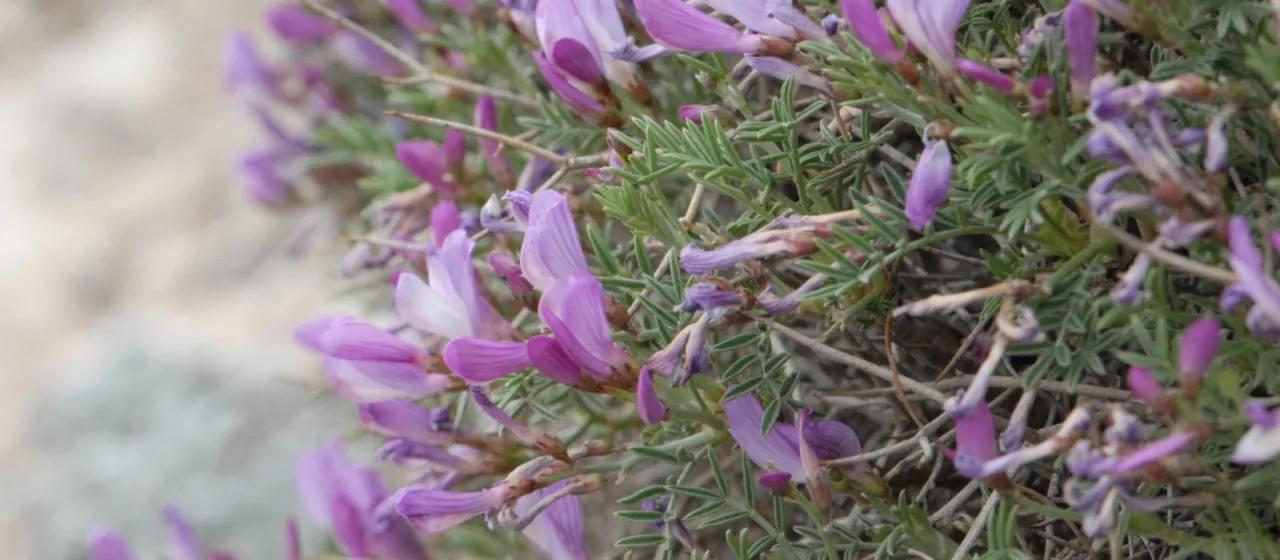
Description
Horned sainfoin (Onobrychis cornuta) is a perennial leguminous plant known for its remarkable ability to survive in harsh, semi-arid environments. Belonging to the Fabaceae family, it stands out among forage crops for its extreme hardiness and its specific adaptation to dry, stony soils where many other plants fail to establish.
The native range of this species extends across the mountains and arid regions of Central and Western Asia, as well as the Caucasus. Its evolutionary development in these areas has resulted in deep-reaching root systems and specialized morphological traits that help the plant minimize water loss and endure the severe climate of the mountain-steppe zone.
Botanically, this species is characterized by its woody or semi-shrubby growth habit and complex pinnate leaves. The flowers are typically arranged in dense, showy spikes that attract a variety of pollinators. These biological adaptations allow the plant to thrive in nutrient-poor conditions, often playing a critical role in preventing soil erosion on sloped terrains.
In terms of agricultural requirements, horned sainfoin demands well-drained, alkaline or calcareous soils. It is intolerant of waterlogging, which makes site selection for cultivation crucial. Agronomically, it requires little input, as it is self-sufficient in nitrogen fixation and is highly resistant to the common pathogens that frequently affect more delicate forage legumes like alfalfa.
The primary economic use of this plant is as a source of high-quality forage, particularly suitable for sheep and cattle in grazing systems. It provides nutritious biomass that is free from bloating-inducing agents. Furthermore, its role as a honey plant makes it an asset to biodiversity, supporting local bee populations while contributing to the sustainability of agricultural landscapes.
- High drought and frost resistance.
- Excellent soil stabilizer.
- Nutritional value for livestock.
- High honey production potential.
- Long-lasting perennial cover.