
Description
The two-flowered restharrow (Ononis biflora) is an annual herbaceous plant belonging to the Fabaceae family. As a member of the legume family, this species possesses the valuable ability to form symbiotic relationships with nitrogen-fixing bacteria, which contributes to the enrichment of soil nitrogen levels in agricultural environments.
Originally native to the Mediterranean region and parts of Western Asia, the species is widely distributed across areas characterized by a Mediterranean climate. Its historical range allows it to thrive in regions where summers are hot and dry, making it a potentially resilient crop for arid land management where conventional agriculture faces significant challenges.
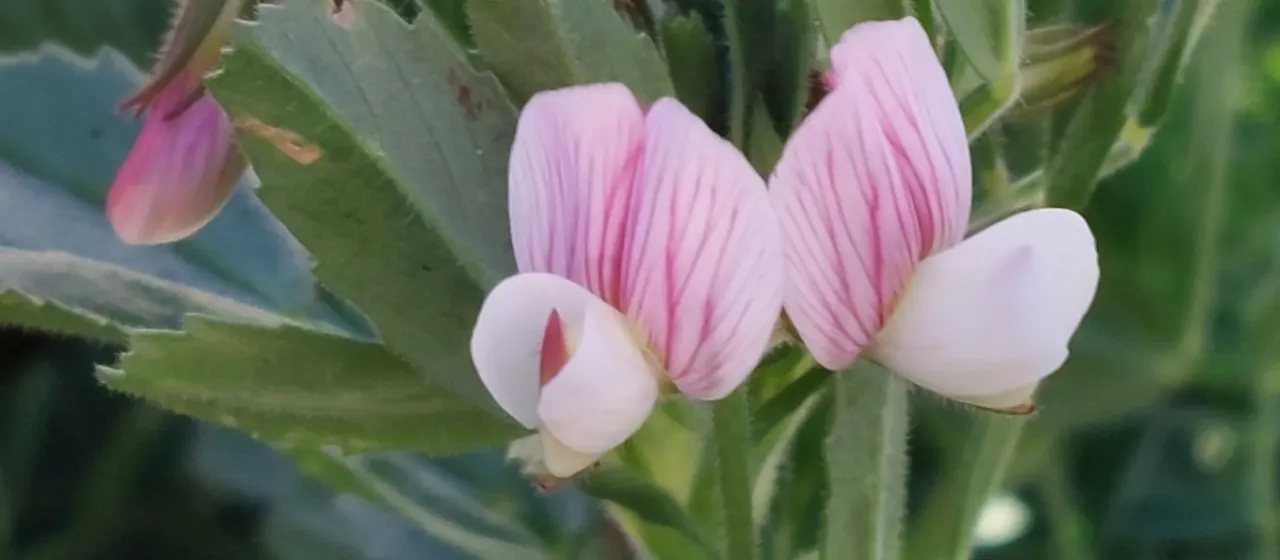
Botanically, the plant is characterized by a glandular, hairy stem and distinctive flowers that usually appear in pairs within the leaf axils, hence the species name biflora. The foliage is adapted to minimize transpiration, allowing the plant to maintain metabolic activity even under conditions of moderate water stress during the growing season.
Cultivation requirements for Ononis biflora emphasize the need for well-draining, slightly alkaline to neutral soils. It performs best in open, sunny locations with minimal competition from weeds. In terms of agronomic practice, timely sowing is crucial to ensure deep root establishment before the onset of the peak summer heat.
Economic and agricultural utility includes:
- Use as a cover crop for arid soil stabilization
- Potential as a protein-rich forage for livestock
- Role in ecological restoration of degraded drylands
- Scientific interest for secondary metabolites in pharmaceutical research
Like many leguminous crops, this plant is susceptible to various fungal pathogens, such as powdery mildew, especially if irrigation levels are improperly managed. Common agricultural pests include aphids and seed-eating insects. Effective control strategies involve maintaining proper planting density to improve air circulation and implementing balanced crop rotation schedules to break the pest life cycle.