
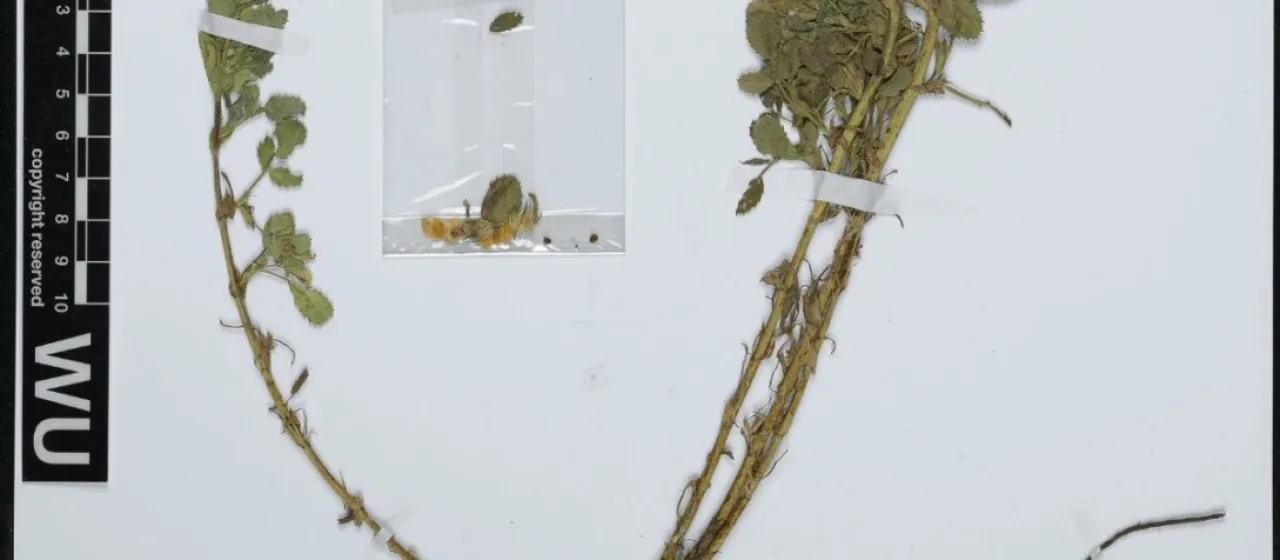
Description
Ononis cossoniana is a perennial herbaceous plant belonging to the diverse legume family (Fabaceae). This species is specifically adapted to arid and semi-arid environments, making it a unique object of study for both botanical research and specific agricultural applications in desertification-prone areas.
The origin of Ononis cossoniana is primarily rooted in North African ecosystems. It has evolved to thrive in Mediterranean climates, where survival depends on the ability to withstand prolonged heat and limited water availability. Consequently, the plant is naturally distributed in sandy, stony, or semi-desert habitats where few other crops can successfully establish.
Botanically, it features a semi-shrub structure with a deeply penetrating taproot system, which serves as a vital survival mechanism for extracting moisture from deep soil horizons. Its leaves are often pubescent, which helps minimize transpiration. The flowers exhibit the standard papilionaceous shape typical of the Fabaceae family, usually appearing in shades of pink or purple during the blooming season.
Agricultural success with Ononis cossoniana requires meticulous attention to soil structure; it thrives in well-drained, sandy, or light-textured soils. Overwatering is the most significant threat to this crop, as it induces root rot and encourages fungal infections. The plant requires maximum solar exposure and is well-suited for cultivation in open, arid field conditions.
Economically, the species is valued for its potential in herbal medicine and soil management. Compounds derived from its roots are studied for their pharmacological potential. Furthermore, its role in sand stabilization and soil erosion control makes it a valuable species for ecological restoration projects in regions where land degradation is a significant concern.
- Excellent drought tolerance characteristics.
- Deep taproot system for soil stabilization.
- Rich chemical profile for potential pharmaceutical use.
- Thrives in poor, sandy, and alkaline soils.