
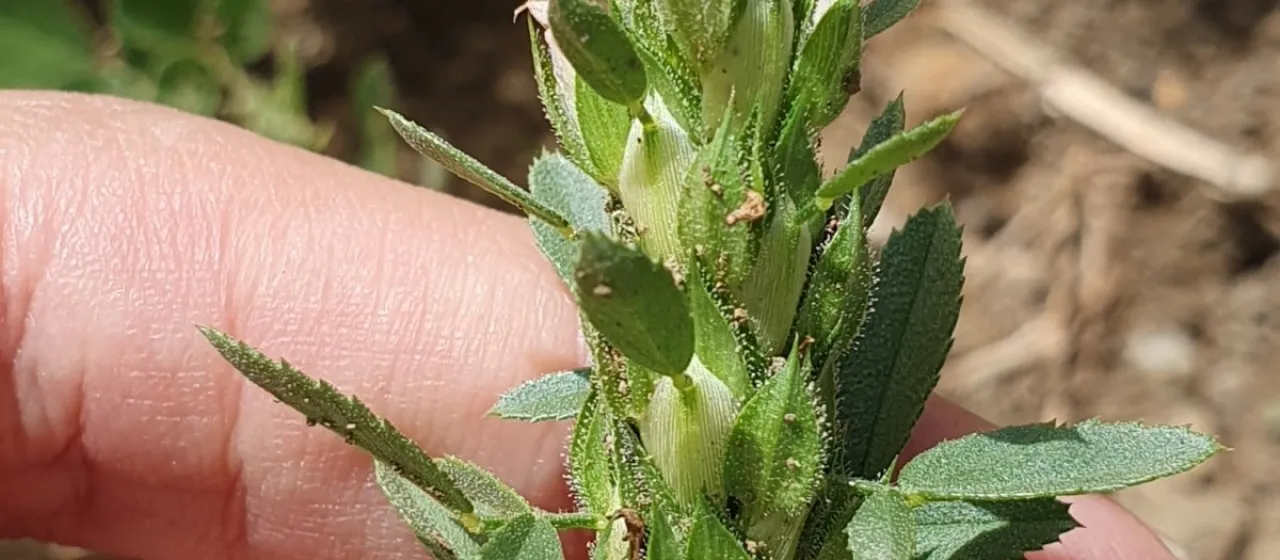
Description
Smooth restharrow (Latin Ononis mitissima) is an annual herbaceous plant belonging to the Fabaceae family. Unlike many of its perennial relatives, this species completes its lifecycle within a single growing season, making it a distinct subject for agronomic study and potential integration into sustainable farming systems.
Originating from the Mediterranean region, the species is widely distributed across Southern Europe and Northern Africa. It thrives in temperate climates characterized by long, sunny growing periods and well-drained soils. Its ability to adapt to arid conditions makes it a resilient choice for regions with fluctuating seasonal rainfall.
Botanically, Ononis mitissima is defined by its glandular hairs, which give the plant a soft, downy texture. It features trifoliate leaves and small, delicate pink or purple flowers arranged in loose inflorescences. The plant’s root system is relatively shallow compared to perennial species, yet efficient at nutrient uptake in varied soil types.
Regarding soil and climatic requirements, this crop performs best in sandy or loamy soils with a neutral pH. Proper field management includes timely sowing in early spring and ensuring adequate spacing to promote airflow, which helps mitigate moisture-related stress. The plant is particularly sensitive to waterlogging, necessitating fields with excellent natural drainage.
Economically, the smooth restharrow is valued for its nitrogen-fixing capabilities, which improve soil fertility for subsequent crops. In agricultural practices, it is sometimes used as a cover crop or green manure. Common pests include aphids and seed-feeding beetles, while disease management focuses on preventing root rot through balanced irrigation and proper crop rotation strategies.