
Description
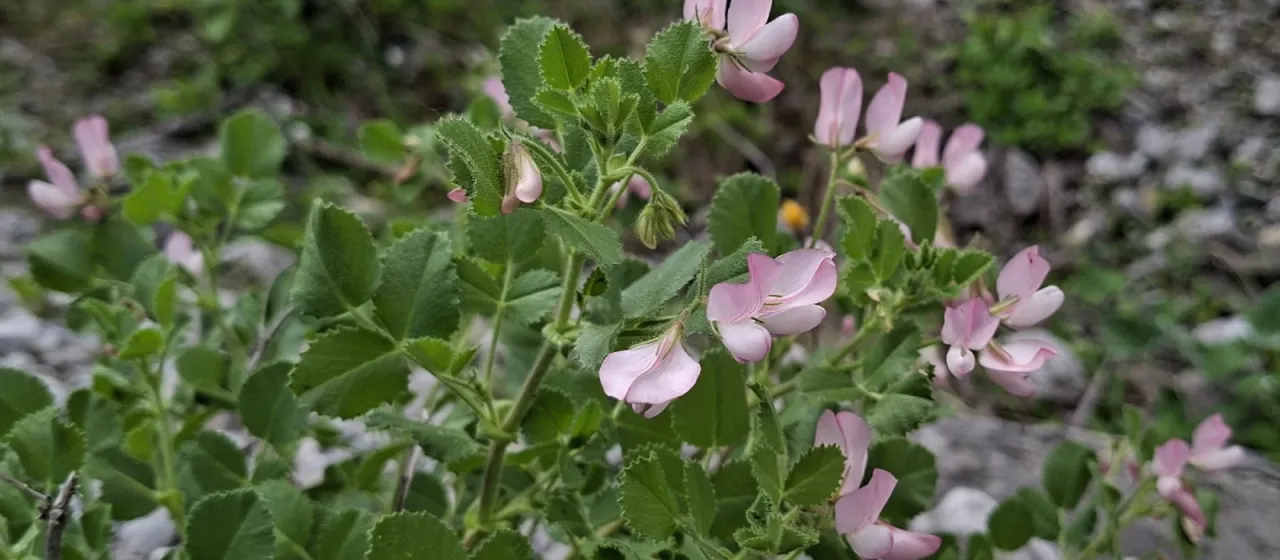
The round-leaved restharrow (Ononis rotundifolia) is a perennial herbaceous plant belonging to the Fabaceae family. Known for its aesthetic appeal and medicinal properties, this species is characterized by its distinctively rounded, serrated foliage and vibrant, pea-like pink blossoms that bloom throughout the summer months.
The plant originates from the mountainous regions of Southern and Central Europe, specifically the Alps and Pyrenees. In cultivation, it thrives in environments that mimic its natural stony, lime-rich habitats. It is primarily used in specialized gardening and botanical farms, favored for its resilience and ability to grow in challenging conditions.
Botanically, Ononis rotundifolia grows as a small, bushy shrub reaching heights of up to 60 centimeters. Its trifoliate leaves and deep, taproot-driven root system allow it to survive in dry, well-drained soils. The plant is well-adapted to high-light environments and plays a role in nitrogen fixation, typical of many legumes.
Agricultural requirements for this crop focus on providing full sun and alkaline or neutral soil with excellent drainage. It is highly intolerant of waterlogged conditions, which can lead to root rot. When establishing the crop, sowing in a prepared, gravelly medium is recommended. Maintenance is low, requiring only periodic weeding and occasional pruning to maintain a bushy structure.
The economic value of this plant lies in its dual use: as a medicinal herb and a high-quality pollinator-friendly plant. It attracts various pollinators, contributing to biodiversity on agricultural lands. Common health issues include fungal leaf spots under humid conditions and attacks by aphids or spider mites. Proper crop management, including adequate spacing and air circulation, is key to preventing these problems.