
Description
Onopordum bracteatum is a biennial herbaceous plant belonging to the Asteraceae family. Known for its robust growth and ecological versatility, this crop is recognized by agronomists for its potential as a source of nectar, pharmaceutical compounds, and biomass in arid agricultural regions.
Originating from the Mediterranean basin and Western Asia, the plant thrives in diverse environmental conditions. Its natural habitat includes rocky slopes, steppes, and disturbed soils. Due to its historical adaptation, the crop has become a subject of interest for sustainable farming in regions facing water scarcity and soil degradation.
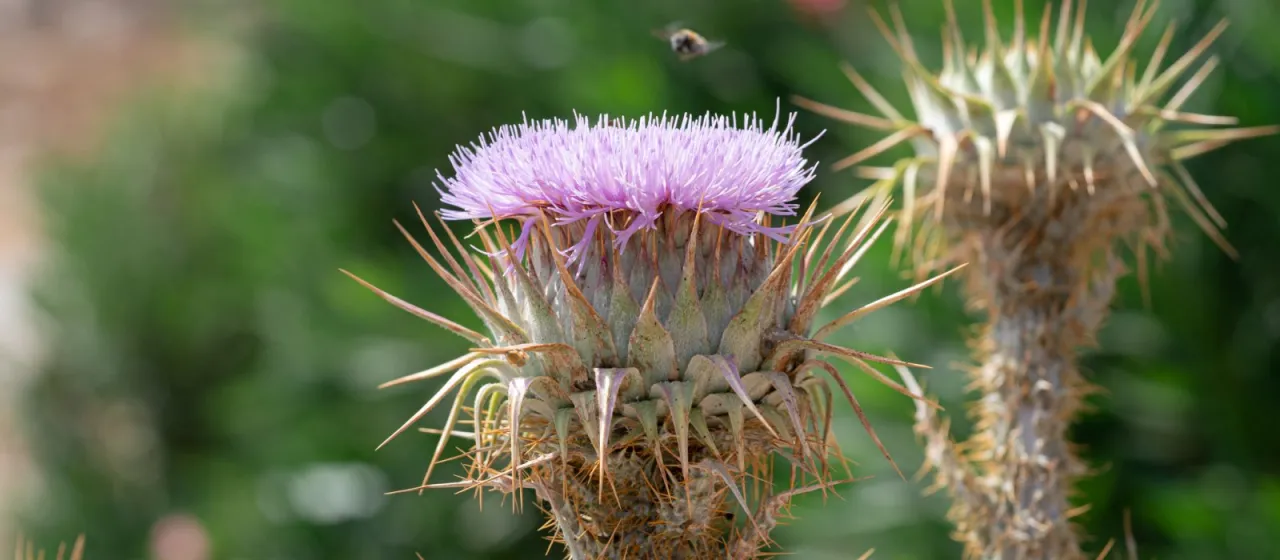
Botanically, Onopordum bracteatum is characterized by a sturdy, branched stem that can reach significant heights. Its foliage is covered in a dense, silvery tomentum, which acts as a protective layer against transpiration. The inflorescences are large, spiny, and striking purple, serving as a critical nectar source for pollinators during the flowering season.
Agronomic requirements for this species are relatively modest. It demands full sun exposure and well-drained, lime-rich soil to thrive. The plant's deep taproot system allows it to access minerals and moisture unreachable by standard cereal crops, making it a valuable addition to regenerative agricultural systems and permaculture projects.
The primary directions for economic utilization include:
- Apiculture: Supporting large-scale honey production.
- Pharmacology: Harvesting extracts for liver support and anti-inflammatory properties.
- Industrial use: Extraction of lipids and technical oils from seeds.
- Landscape management: Erosion control on slopes and wasteland rehabilitation.
Pest management should focus on aphids and specific weevils that target the inflorescences. Fungal pathogens, such as powdery mildew, may emerge if the planting density is too high or if ventilation is poor. Integrated pest management practices, including maintaining proper plant spacing, are essential to ensure a healthy and high-yielding crop cycle.