Description
Onopordum leptolepis is a biennial herbaceous plant belonging to the Asteraceae family. Known in some regions as a type of tatar thistle, this species is gaining attention in agricultural research for its remarkable ability to thrive in arid environments and degraded landscapes where other crops fail to establish.
The plant originates from the arid regions of Central Asia. Its natural range is characterized by intense heat and low precipitation levels. Due to its deeply penetrating taproot system, the plant can access subsoil moisture, making it a robust candidate for cultivation in semi-desert or steppe zones that suffer from frequent droughts.
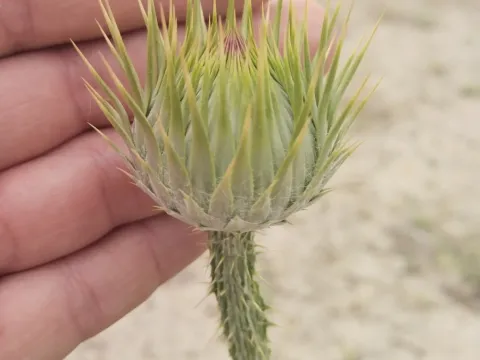
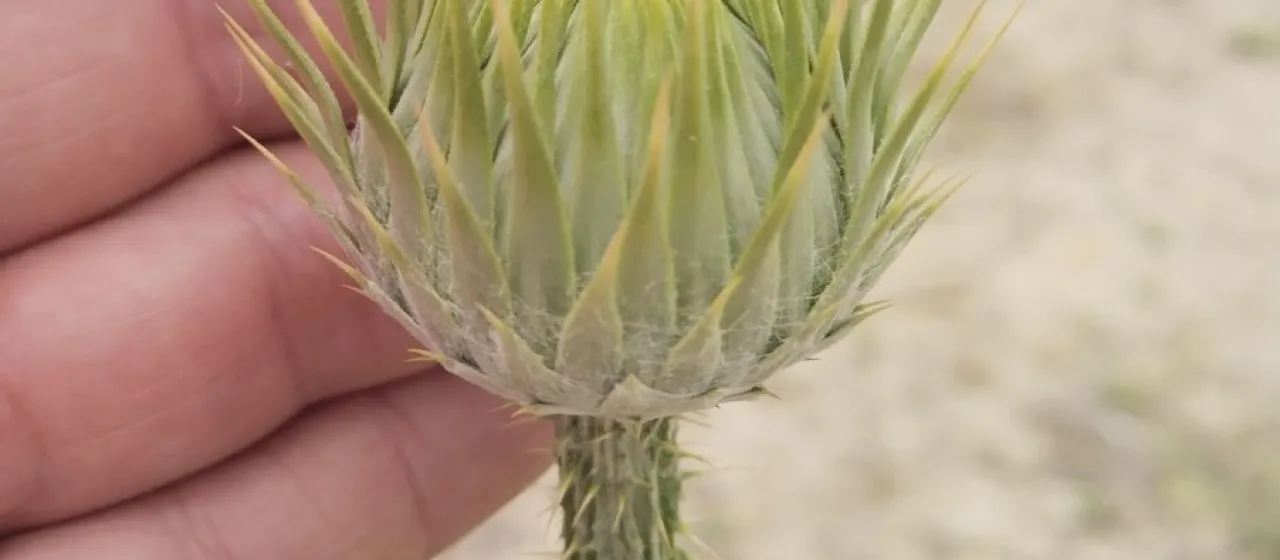
Botanically, the plant features a tall, branched stem with spiny "wings" and dense grayish tomentose hair. The leaves are deeply lobed and armed with sharp spines, providing protection against herbivores. The large purple flower heads are highly productive in terms of nectar, making it a significant plant for local pollinator populations.
The agronomic requirements for this species are minimal compared to traditional cereals. It demands full sun exposure and well-drained, porous soil. Cultivation involves preparing the seedbed to ensure good soil-to-seed contact, with planting typically performed in early spring. It does not require high levels of nitrogen fertilization, which reduces production costs.
The economic potential of Onopordum leptolepis includes several key sectors:
- Apiculture: It serves as a vital late-season honey source.
- Oilseed production: The seeds contain lipids suitable for industrial applications.
- Soil restoration: Its root system helps in soil stabilization and prevents wind erosion.
- Biomass: It can be processed for organic mulch or green manure.
Common pests include seed-feeding insects and various weevils that target the capitula. Diseases are rare under optimal dry conditions; however, fungal pathogens such as powdery mildew may appear if the soil is chronically waterlogged. Proper drainage and density management are the primary methods for disease prevention in a field setting.
Photo gallery