
Description
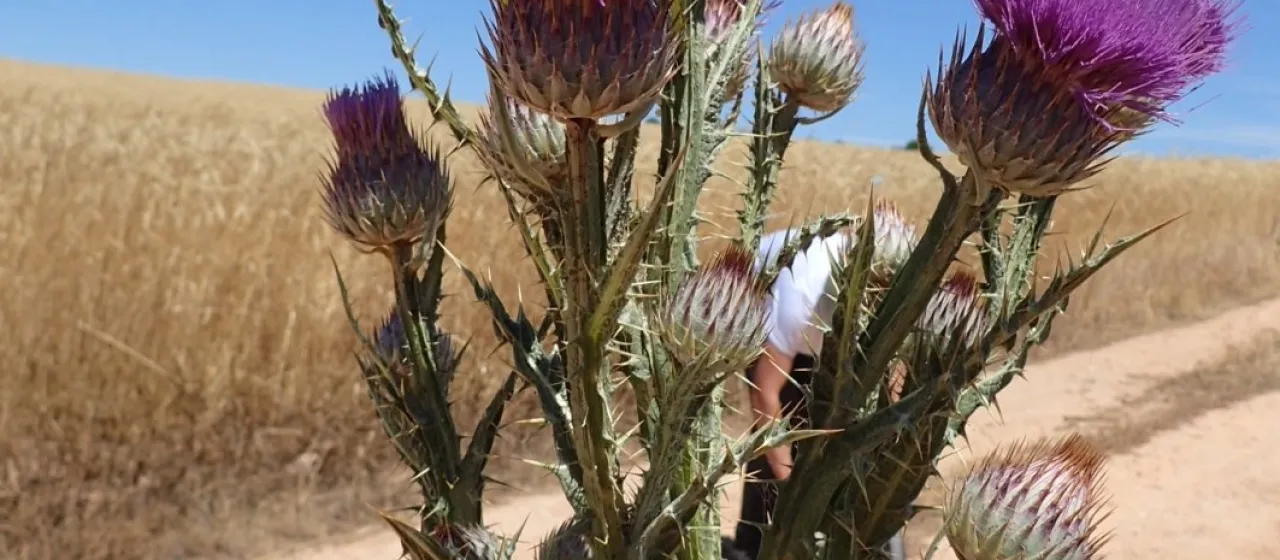
Cotton thistle (Onopordum nervosum) is a biennial herbaceous plant belonging to the Asteraceae family. It is widely recognized for its striking appearance, characterized by silvery-white woolly foliage and large, architectural flower heads. This plant serves as an impressive specimen in gardens, offering a unique texture and color palette that contrasts beautifully with green-leafed vegetation.
Native to southwestern Europe, specifically the Iberian Peninsula, this species has evolved to thrive in sunny, open habitats with rocky or poor soils. Its natural range has led to its successful adaptation in many gardens across the world, provided that the growing environment mimics its native xeric conditions, characterized by intense sunlight and excellent drainage.
Botanically, Onopordum nervosum is defined by its robust habit and deeply lobed leaves featuring prominent white veins. During its second year, the plant produces tall, branching stems topped with large, vibrant purple-pink flower heads. These blooms are highly attractive to pollinators, particularly bees and butterflies, making the plant a beneficial addition to ecologically focused garden designs.
Regarding cultivation, the plant requires full sun exposure and gritty, well-drained soil. It is notoriously drought-tolerant once established and does not require frequent fertilization. Gardeners should ensure adequate spacing, as the plant can grow quite large. Propagating from seed is the standard method, as its deep taproot makes transplanting established individuals difficult and often unsuccessful.
In terms of usage, Onopordum nervosum is a premier choice for xeriscaping, gravel gardens, and informal naturalistic planting schemes. Its sculptural form makes it a focal point in landscape design. Beyond its visual impact, it is appreciated for its low-maintenance nature, requiring almost no intervention once it has settled into its location, aside from occasional clearing of surrounding weeds.
- Highly tolerant of prolonged heat and low water availability.
- Thrives in lean, well-drained soil conditions.
- Minimal pest pressure; primarily resistant to garden insects.
- Can be susceptible to root rot if soil drainage is insufficient.