
Description
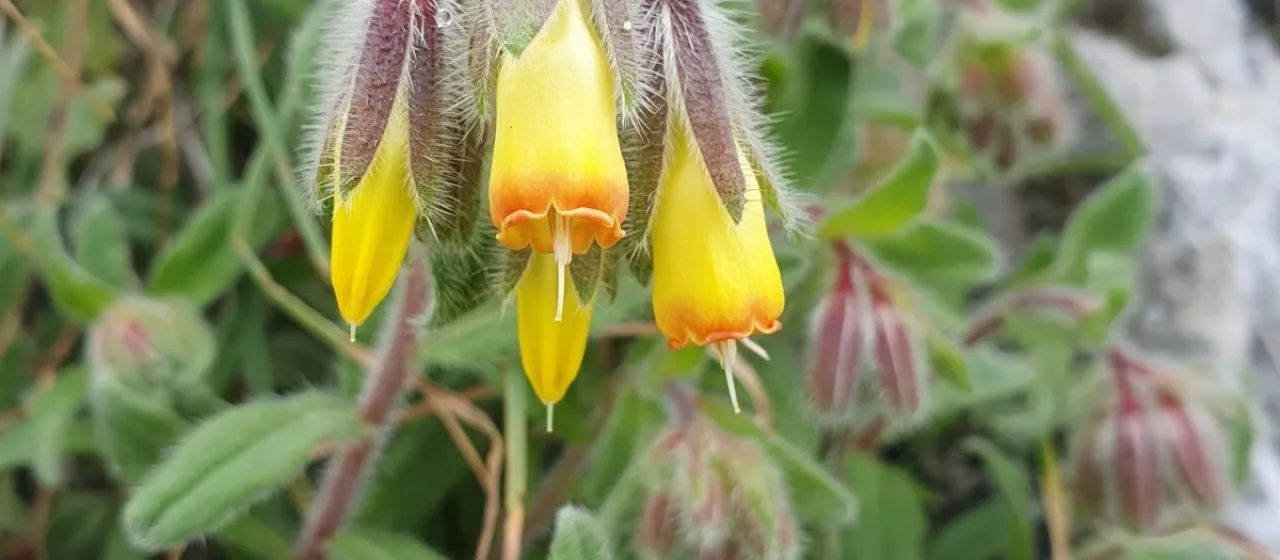
Shrubby golden-drop (Onosma frutescens) is a perennial subshrub belonging to the Boraginaceae family. Known for its aesthetic appeal and resilience, this plant is a staple in Mediterranean-style landscaping and rock gardens, where it thrives in conditions that prove challenging for more demanding species.
The native habitat of this plant includes the sunny, rocky slopes of the Eastern Mediterranean and the Balkans. Due to its evolutionary history, the species is perfectly adapted to environments with high solar radiation and low soil moisture, making it an excellent candidate for xeriscaping and sustainable garden projects.
Botanically, it is characterized by woody stems at the base and leaves covered with coarse, stiff hairs that protect the plant against heat stress. During the blooming season, it produces clusters of tubular, yellow flowers that are highly attractive to pollinators, adding significant value to biodiversity in domestic garden settings.
To succeed with Onosma frutescens, agronomists recommend well-drained, alkaline, or stony soils. Proper drainage is the most critical factor; the root system is highly susceptible to rot if water persists in the substrate. It requires a full-sun position and does not need frequent or heavy fertilization, as it is adapted to low-nutrient soils.
Economically and practically, this plant is primarily used as an ornamental for drystone walls, crevices, and gravel gardens. In addition to its horticultural role, research into its chemical composition continues, as plants of the Onosma genus often synthesize bioactive compounds with potential applications in natural pharmaceuticals.
- Excellent drought tolerance.
- Minimal fertilization requirements.
- Suitable for calcareous and rocky soils.
- High sensitivity to over-irrigation.
Pests and diseases are generally minimal, provided the plant is situated correctly. The most common agronomic issue is root or crown rot, often triggered by waterlogged winter conditions. Providing good airflow around the foliage and ensuring the crown is kept away from stagnant water are essential practices for maintaining healthy specimens.