
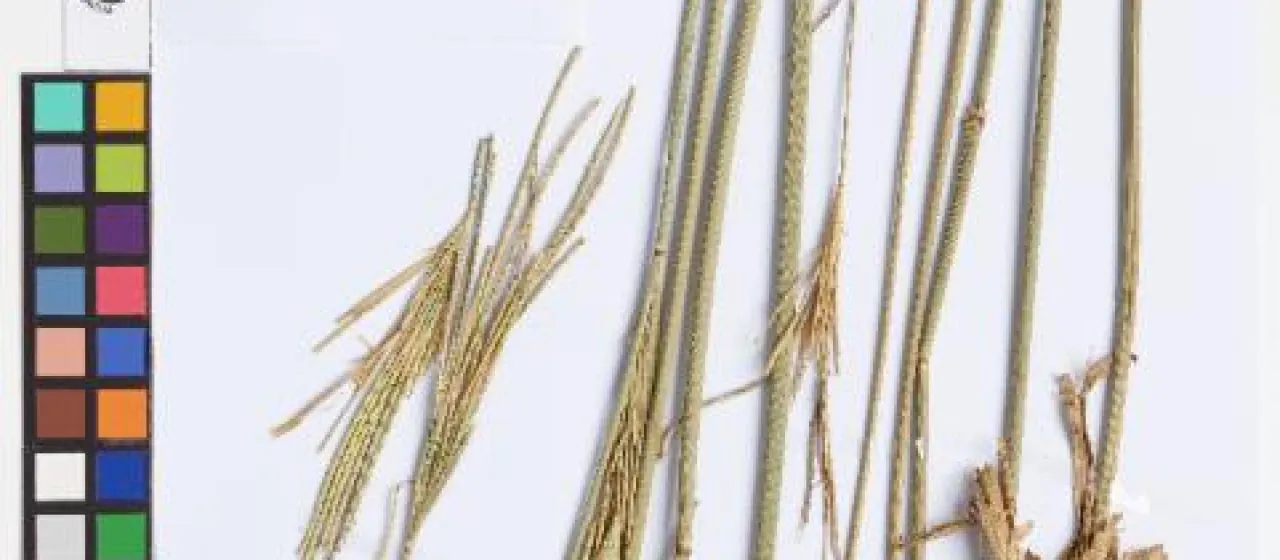
Description
Ophiuros exaltatus is a perennial grass species belonging to the Poaceae family. In agricultural settings, it is recognized as a robust forage crop capable of producing significant biomass, particularly in tropical and subtropical environmental conditions.
The plant originates from Southeast Asia and Australia, where it naturally thrives in savannahs and open grasslands. Its cultivation range has expanded globally to regions with similar climatic profiles, focusing on establishing reliable pasture lands for livestock grazing.
Botanically, the species is defined by its erect, rigid stems and narrow, linear leaves. A distinguishing feature is its slender, cylindrical spikes that resemble a serpent's tail, providing the basis for its scientific name. It exhibits a vigorous growth habit, forming dense clumps that provide effective soil cover.
Optimal growth requires well-drained soils and high sun exposure. While the crop is moderately drought-tolerant, consistent moisture during the early stages of establishment is critical for long-term productivity. Soil fertility management, particularly nitrogen fertilization, is often necessary to maximize forage yield.
Agricultural applications of Ophiuros exaltatus include:
- Grazing forage for cattle and other ruminants.
- Hay production when harvested at the vegetative stage.
- Soil conservation and erosion control on sloping agricultural fields.
Typical plant health issues include fungal rusts and leaf spot diseases, which are more prevalent in high-humidity conditions. Insect pests such as stem borers and aphids can occur, requiring integrated pest management strategies to prevent significant damage and ensure the longevity of the pasture stands.