
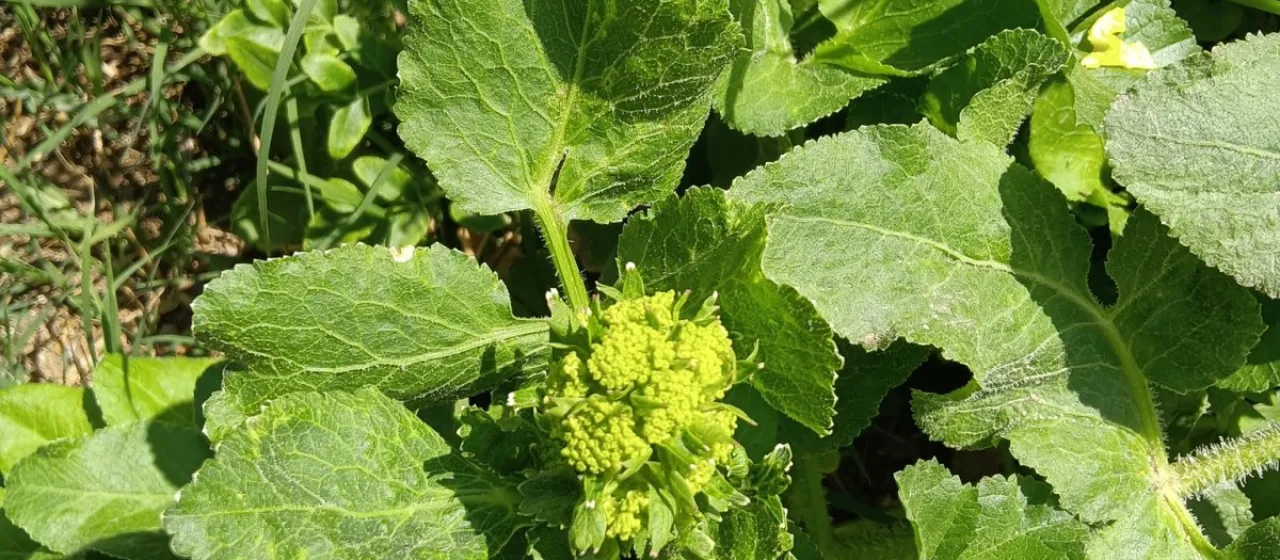
Description
Opopanax (Opopanax chironium) is a perennial herbaceous plant belonging to the Apiaceae family. Native to the Mediterranean region, this plant has been cultivated since antiquity for its aromatic resin. It is a robust plant characterized by its impressive size and typical umbelliferous morphology, making it a distinctive species in arid and semi-arid landscapes.
Botanically, the plant features large pinnate leaves and tall, sturdy stems topped with complex umbels of small yellow flowers. The root system is deep and well-adapted to surviving long periods of drought, which is a critical evolutionary trait for its survival. During the growth cycle, the plant stores specialized secondary metabolites in its roots and lower stems, which constitute the valuable resin collected for commerce.
Climate and soil requirements are strictly linked to its Mediterranean origin. The crop thrives in regions with warm, dry summers and mild winters. It prefers well-drained, lime-rich, or stony soils that do not retain excess water. Proper solar exposure is essential for the development of high-quality resin, as light intensity directly influences the biochemical synthesis of the aromatic compounds.
The agronomic management of Opopanax involves deep soil cultivation before planting to accommodate root development. Weed control is essential during the initial establishment phase. Once the crop is established, it becomes quite resilient, requiring minimal irrigation. Maintenance tasks involve regular monitoring of soil moisture levels and ensuring that the drainage system prevents any risk of waterlogging, which is the primary threat to root health.
The industrial and economic use of Opopanax focuses on the extraction of its gummy resin. This substance is highly valued for various applications:
- Fine perfumery as a base note and fixative.
- Pharmaceutical industry for wound healing and anti-inflammatory formulations.
- Traditional medicine for its spasmolytic and tonic properties.
Common plant health issues include fungal diseases like powdery mildew, which often occur due to poor air circulation or excessive moisture. Pests such as carrot rust flies or various species of aphids may occasionally attack the foliage and stems. Integrated pest management, including crop rotation and the selective use of bio-fungicides, remains the most effective strategy to ensure healthy plant growth and high resin yield.