
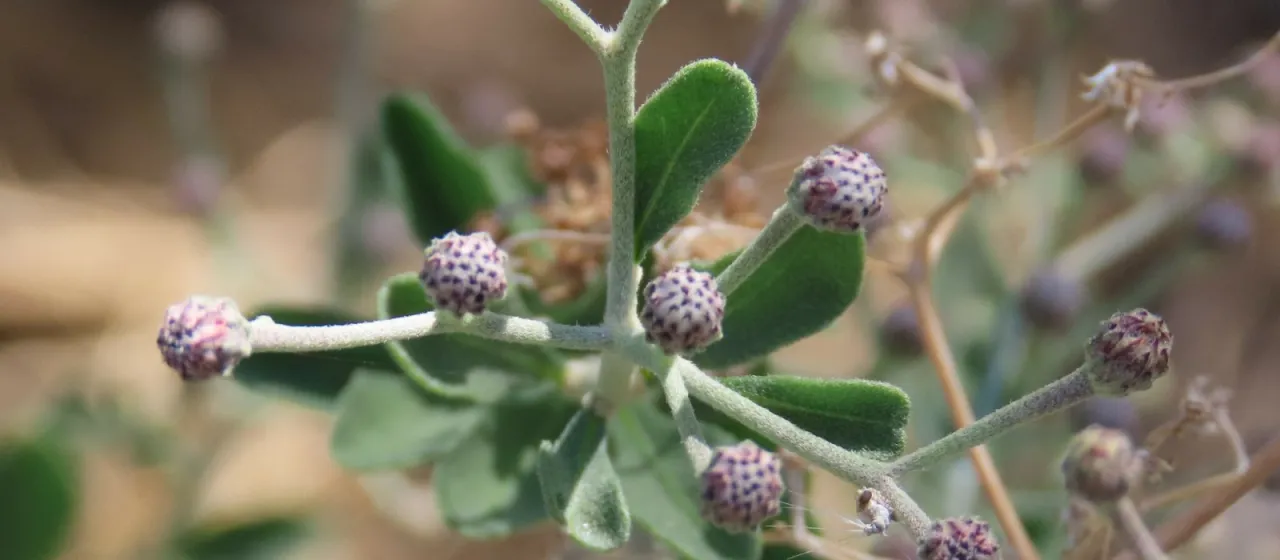
Description
Orbivestus cinerascens is a perennial herbaceous plant belonging to the Asteraceae family. Historically linked to the genus Vernonia, it has recently been reclassified into the distinct genus Orbivestus. This crop is recognized for its ecological resilience and potential for integration into sustainable agricultural systems in tropical climates.
The plant originates from tropical Africa, with its natural range extending across various savannah biomes. Its historical habitat is characterized by distinct wet and dry seasons, which has shaped the plant's ability to remain dormant during periods of drought and rapidly resume growth upon the arrival of rainfall.
Botanically, the plant is known for its distinct grayish, pubescent foliage, which serves as an adaptation to reduce transpiration. The inflorescence consists of compact flower heads, and the root system is typically deep-seated, allowing for nutrient uptake from subsoil layers. The growth habit is generally erect, making it suitable for mechanized field management.
For optimal growth, Orbivestus cinerascens requires well-drained, porous soils and full sun exposure. In terms of agronomy, field preparation should emphasize soil structure improvement. Effective weed control during the seedling stage is critical, as the crop is initially slow to establish cover. Nitrogen management is essential to maximize the yield of green biomass during the peak growing season.
The agricultural utility of the species primarily lies in livestock forage production due to its nutritional content. Furthermore, its extensive root system makes it an excellent choice for soil conservation and erosion control on marginal lands. Current research is also exploring its phytochemical properties for industrial and medicinal applications.
- Excellent drought tolerance across varied soil types.
- High biomass yield suitable for supplemental forage.
- Limited susceptibility to common regional pests.
- Minimal input requirements compared to traditional grain crops.