
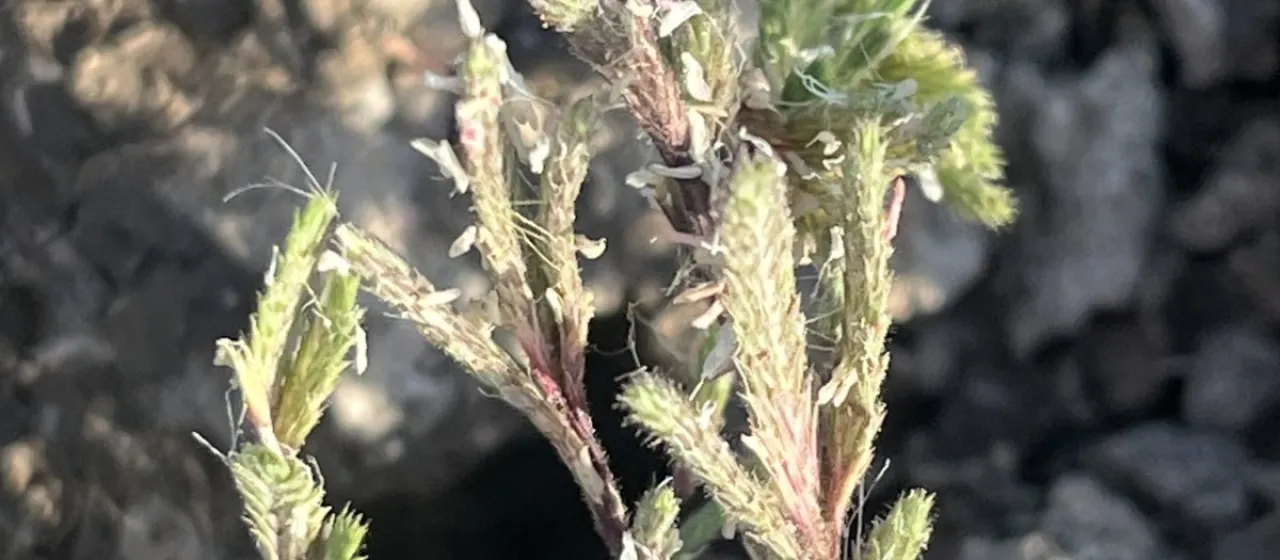
Description
Orcuttia californica, commonly known as California Orcutt grass, is a rare annual species belonging to the Poaceae (grass) family. This plant is a highly specialized hydrophyte, adapted to survive in ephemeral wetlands known as vernal pools.
The plant is native to Southern California and Northwestern Baja California. Its distribution is restricted to specific soil types found in seasonal wetlands that fill with rainwater during the winter and spring, followed by a total desiccation period during the summer months. Due to urban development and agricultural expansion, its natural habitat has been severely fragmented.
Botanically, this grass grows up to 25 centimeters in height. It features dense, hairy, grayish-green foliage that helps the plant cope with the harsh environmental conditions of its habitat. The inflorescences emerge as terminal spikes only once the water levels recede, ensuring that seed production occurs on dry, cracked clay soils.
The ecological requirements for Orcuttia californica are extremely precise, involving specific cycles of inundation and drying. There are no standard agricultural practices for this plant, as it is not a cultivated crop but a protected botanical specimen. Efforts are focused on restoring natural hydrology to ensure the germination of its seed bank.
- Requires vernal pool habitat
- Adapted to clay soils
- Lifecycle triggered by seasonal drying
- Endemic to Southern California region
- High sensitivity to soil disturbance
Regarding its utility, the plant serves primarily as an ecological indicator of high-quality vernal pool habitats. It is not prone to traditional agricultural pests, though its populations can be threatened by invasive non-native plant species that outcompete it when the soil moisture conditions are altered by drainage or overgrazing.