Description
Ornithogalum longibracteatum, commonly referred to as the "pregnant onion" or "false sea onion," is a perennial bulbous plant belonging to the Asparagaceae family. This species is highly valued in horticulture for its unique appearance, characterized by a large, exposed bulb that produces many small bulbils, giving it a "pregnant" look.
The plant originates from South Africa, where it thrives in arid and semi-arid environments. This evolutionary history has equipped the species with succulent leaves and a drought-resistant bulb, allowing it to store significant reserves of water and nutrients for survival during harsh dry seasons.
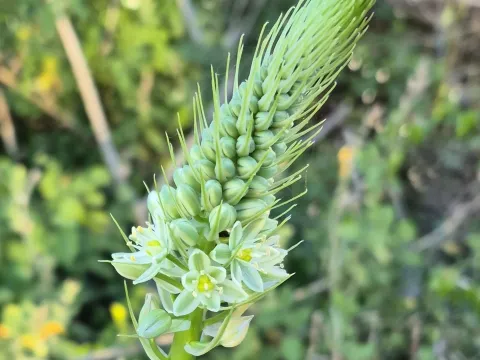
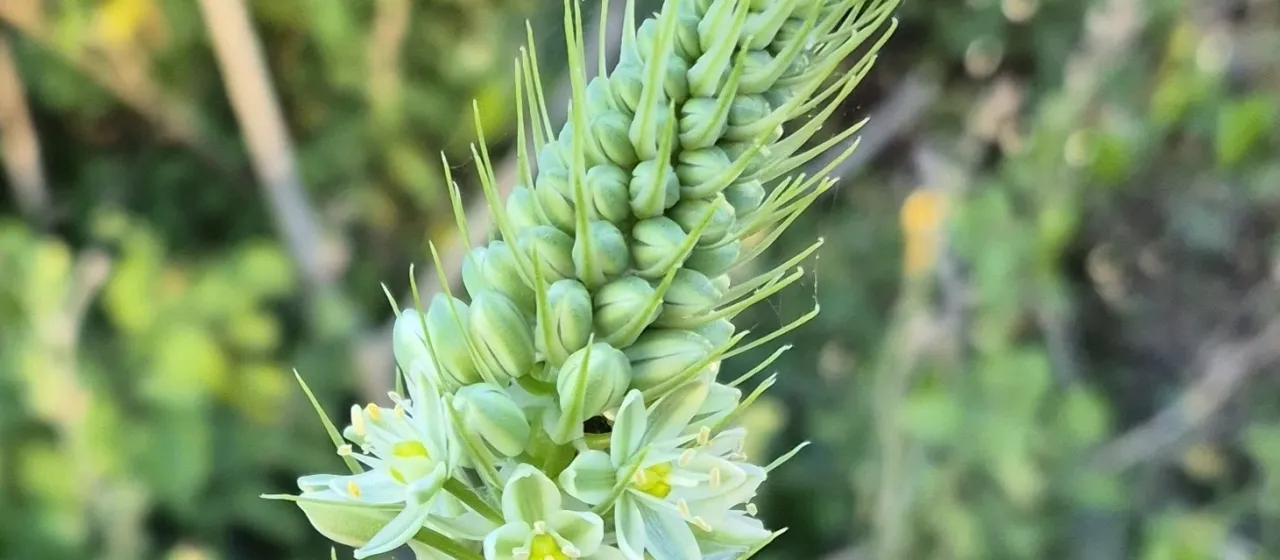
Botanically, the plant features long, drooping, strap-like leaves and a tall, slender inflorescence. The flowers are relatively small, greenish-white, and distinct for their long bracts. The bulb itself is usually partially or fully emerged from the soil, turning light green to olive-colored as it matures under light exposure.
Cultivation requires well-draining, nutrient-rich soil and a bright location with indirect sunlight. It is a resilient indoor plant, tolerant of moderate temperature fluctuations. During the growth phase, consistent watering is beneficial, while during the winter dormancy, irrigation should be strictly reduced to prevent bulb rot.
In terms of utility, it is primarily recognized for its ethnobotanical and medicinal properties. Extracts from the leaves are traditionally used in topical applications for their analgesic and anti-inflammatory qualities. Common issues during cultivation include overwatering leading to fungal infections and potential infestations by pests like mealybugs or spider mites.
Photo gallery