
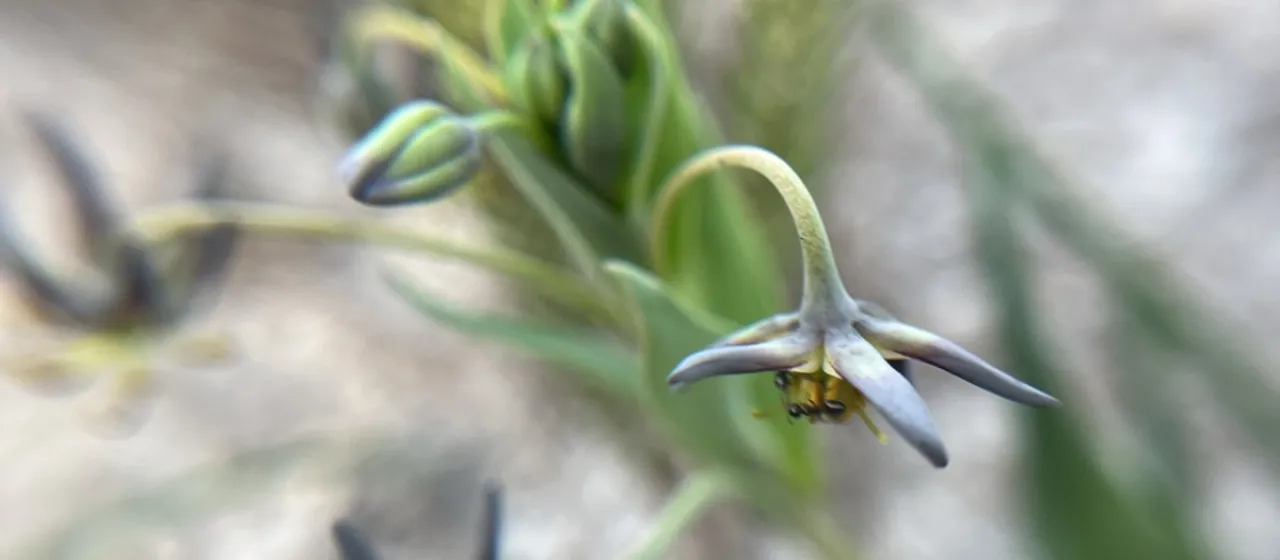
Description
Ornithoglossum viride is a perennial bulbous plant belonging to the Colchicaceae family. It is a distinct botanical species noted for its specific adaptation to the arid environments of its native range, where it has evolved to survive significant seasonal fluctuations in precipitation and temperature.
The plant originates from Southern Africa, where it thrives in regions characterized by distinct wet and dry seasons. This climatic adaptation has driven the development of a storage bulb, which allows the plant to remain dormant during harsh, dry periods, resurfacing only when environmental conditions are optimal for growth.
Botanically, the species is recognized by its unique flower structure, often displaying greenish or brown hues. The foliage is typically slender and basal, emerging after or during the onset of the flowering stage. Its growth habit is relatively compact, making it a specialized subject for those interested in geophytic plants.
In terms of cultivation, the primary requirement is excellent soil drainage. The bulb is highly susceptible to rot, particularly when kept in damp conditions during its dormant phase. Soil should be sandy and mineral-rich, mimicking the natural conditions of the South African veld. A dry rest period is essential for the healthy physiological function of the plant.
The primary use of Ornithoglossum viride is in specialized ornamental collections or botanical gardens. It is not a broad-acre agricultural crop but rather a niche horticultural plant. Common management challenges include monitoring for root rot pathogens and controlling sap-sucking pests like aphids or spider mites, which can thrive if the indoor climate lacks proper ventilation.