Description
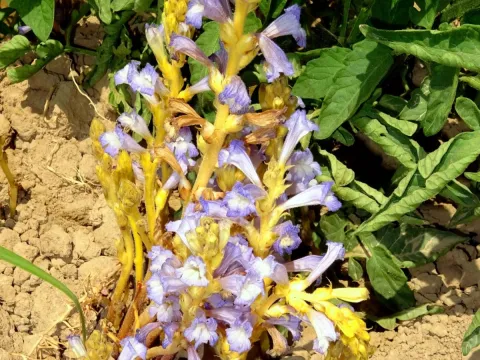
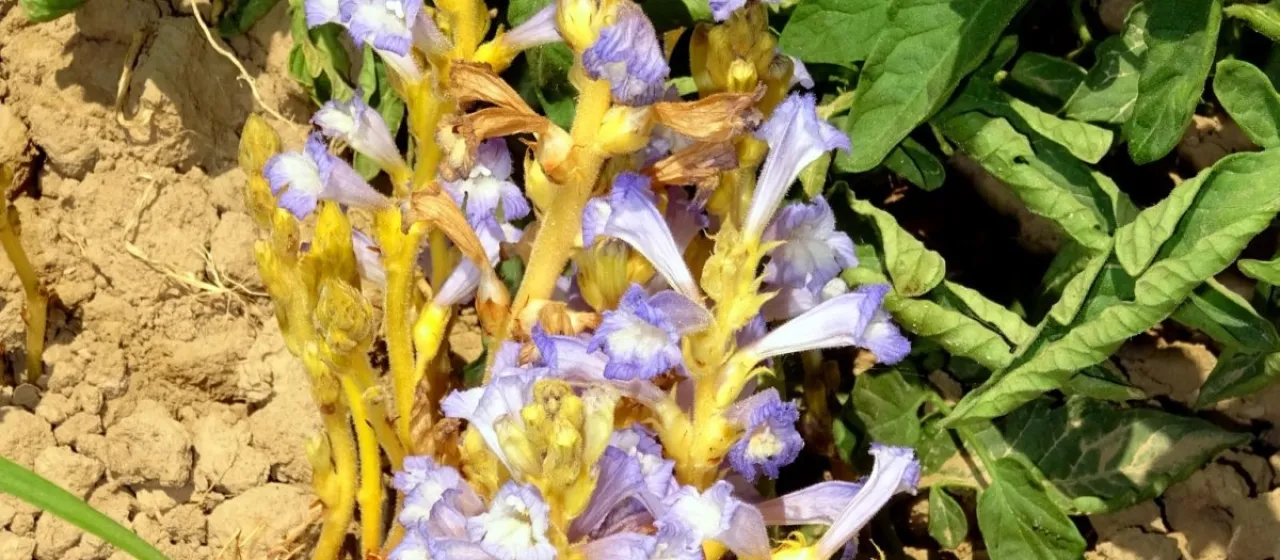
Egyptian broomrape (lat. Orobanche aegyptiaca) is a highly destructive obligate holoparasitic weed belonging to the Orobanchaceae family. Unlike agricultural crops, it lacks chlorophyll and cannot perform photosynthesis, which forces the plant to rely entirely on the vascular system of its host to obtain water and essential nutrients for its development.
The plant originates from the arid regions of the Middle East and Central Asia but has expanded its range significantly, now representing a major threat to agricultural regions in the Mediterranean and beyond. It thrives in hot, dry environments, where the high temperature triggers the germination of its microscopic seeds in the rhizosphere of potential host plants.
Botanically, Egyptian broomrape is characterized by a fleshy, yellowish-brown stem reaching up to 50 cm in height. The plant remains underground during most of its life cycle, developing specialized structures called haustoria that penetrate the roots of the host. Its reproductive potential is immense, as a single plant can produce up to half a million tiny seeds that can remain dormant in the soil for over a decade.
There is no economic value for this species, as it is strictly a parasitic weed. It targets a wide range of economically important crops, including sunflowers, tomatoes, eggplants, melons, and watermelons. Infestation leads to severe physiological stress in host plants, resulting in stunted growth, chlorosis, reduced fruit set, and, in severe cases, complete crop failure.
Management of Orobanche aegyptiaca requires an integrated approach to break the life cycle of the parasite:
- Utilizing trap crops or catch crops to induce suicidal germination of the broomrape seeds.
- Planting resistant or tolerant crop varieties, particularly in sunflower production.
- Applying systemic herbicides that are absorbed by the host and translocated to the parasite.
- Strict quarantine regulations and cleaning of farm machinery to stop the spread of seeds between fields.
Photo gallery