Description
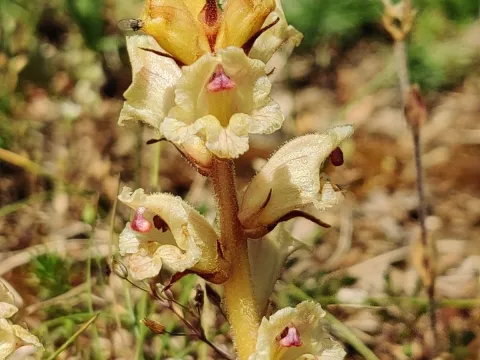
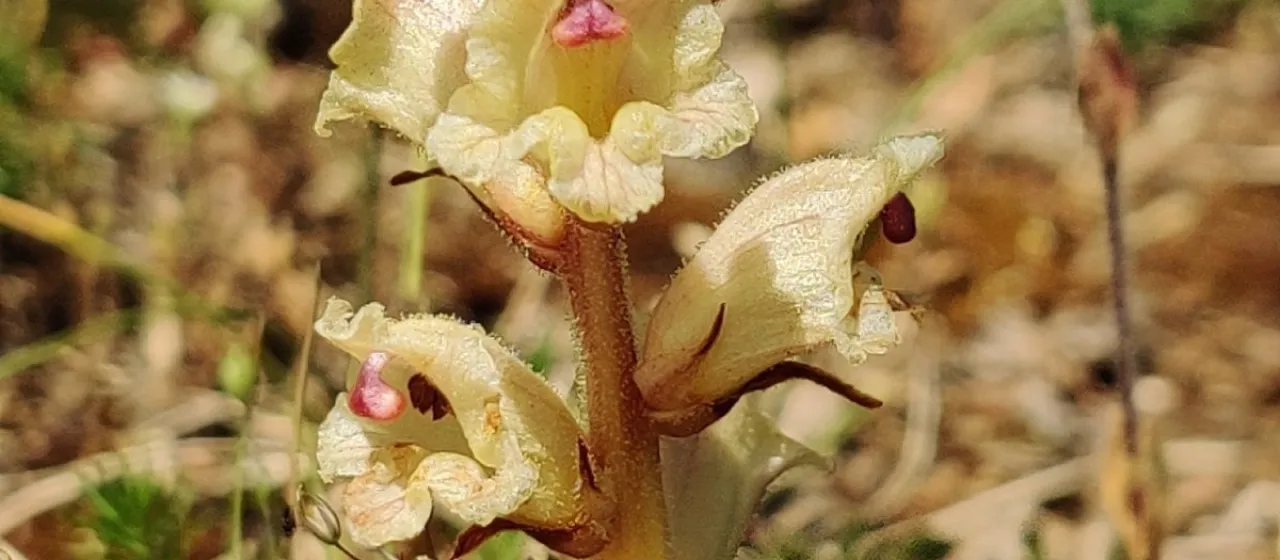
White broomrape (Orobanche alba) is a specialized herbaceous perennial plant belonging to the Orobanchaceae family. Unlike conventional crops, this plant lacks chlorophyll and cannot perform photosynthesis. It is an obligate root parasite, meaning it derives its complete nutritional requirements, including carbohydrates, water, and minerals, from the root systems of specific host plants.
The geographical range of white broomrape covers large parts of Europe, Central Asia, and the Caucasus. It is typically found in open, sun-exposed habitats, such as steppes, rocky slopes, and mountain grasslands. Its distribution is strictly correlated with the presence of its primary host plants, which are predominantly species within the Lamiaceae family, particularly the genus Thymus.
Botanically, the plant consists of a simple, unbranched or slightly branched stem, ranging from 15 to 40 cm in height, covered in scale-like leaves. The inflorescence is a dense spike bearing tubular flowers, typically exhibiting white or purplish hues. The root system is vestigial, modified into haustoria, which are specialized organs that penetrate the host’s vascular tissue to draw necessary nutrients.
The plant’s ecological requirements are dictated by its host interactions. Germination of its minute seeds is triggered by chemical exudates released by the host roots into the soil. Agronomic management is challenging because the majority of its life cycle occurs underground. Effective control strategies often focus on preventing seed set or implementing crop rotation cycles that break the parasite's life cycle.
In terms of хозяйственное (economic) utility, white broomrape has no value and is regarded strictly as a harmful parasitic weed. While it does not affect major industrial crops as aggressively as some other Orobanche species, it can still reduce the vigor of its host plants in local ecosystems. Its populations are naturally regulated by specific insects that prey on the flower buds and occasional fungal pathogens that infect the stems.
Photo gallery