Description
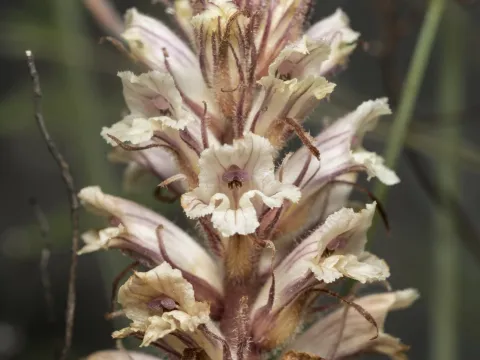
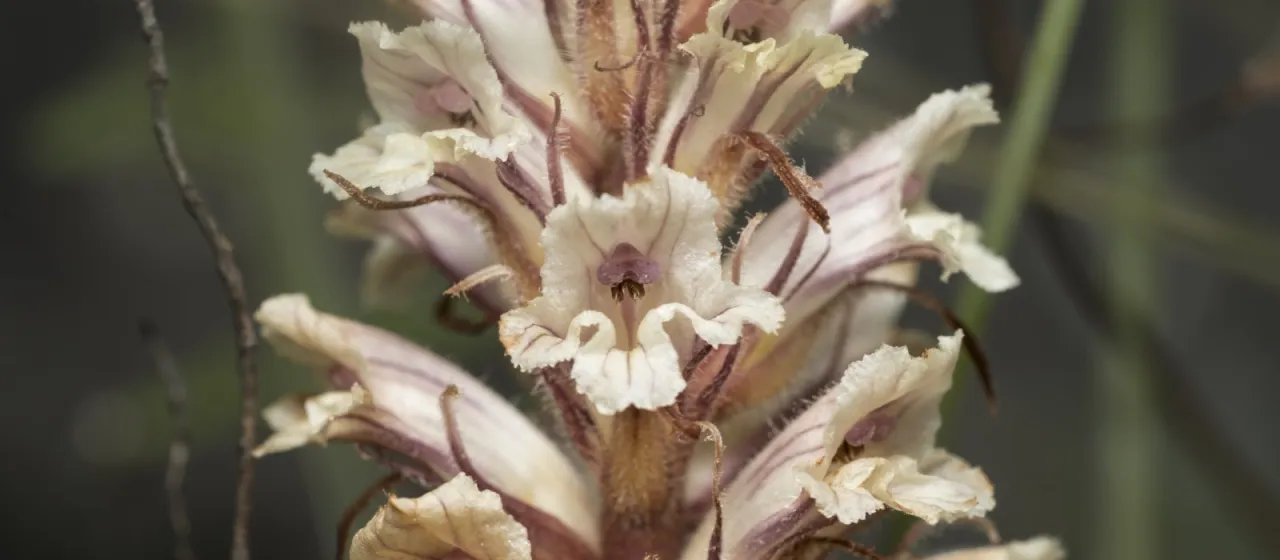
Wormwood broomrape (Orobanche artemisiae-campestris) is a specialized holoparasitic flowering plant belonging to the Orobanchaceae family. It lacks chlorophyll and is entirely dependent on host plants, typically from the genus Artemisia, for its survival and nutrient acquisition.
The plant is native to various regions across Europe and Asia, primarily inhabiting grasslands, steppes, and semi-arid environments. Its range correlates closely with the distribution of its host plants. While not a conventional crop, its parasitic nature makes it a significant subject of study in weed science and agricultural protection.
Botanically, the plant develops a thick, unbranched stem adorned with scale-like leaves and a dense spike of flowers. Its subterranean structure consists of a complex haustorium system that penetrates the host root cortex and vascular tissue, effectively siphoning water and photosynthates from the host to fuel its own growth.
Regarding climate and soil, the wormwood broomrape thrives in well-drained, sandy or loamy soils. Agricultural management involves strict prevention, as the tiny seeds are easily dispersed by wind and equipment. Effective control measures rely on cultural practices such as rotating crops with non-host species and ensuring the cleanliness of seed batches to prevent field contamination.
There are no positive economic or agricultural uses for this species; it is strictly categorized as a weed. Its impact on ecosystems and potential impact on agriculture necessitate robust monitoring and eradication strategies. Key management practices include:
- crop rotation with non-host plants;
- thorough cleaning of agricultural machinery;
- hand-pulling or chemical treatment of flower stalks;
- seed bank depletion through trap cropping.
Photo gallery