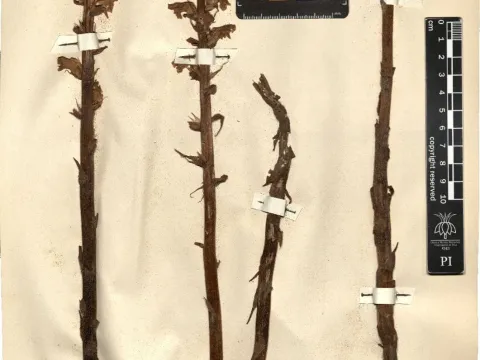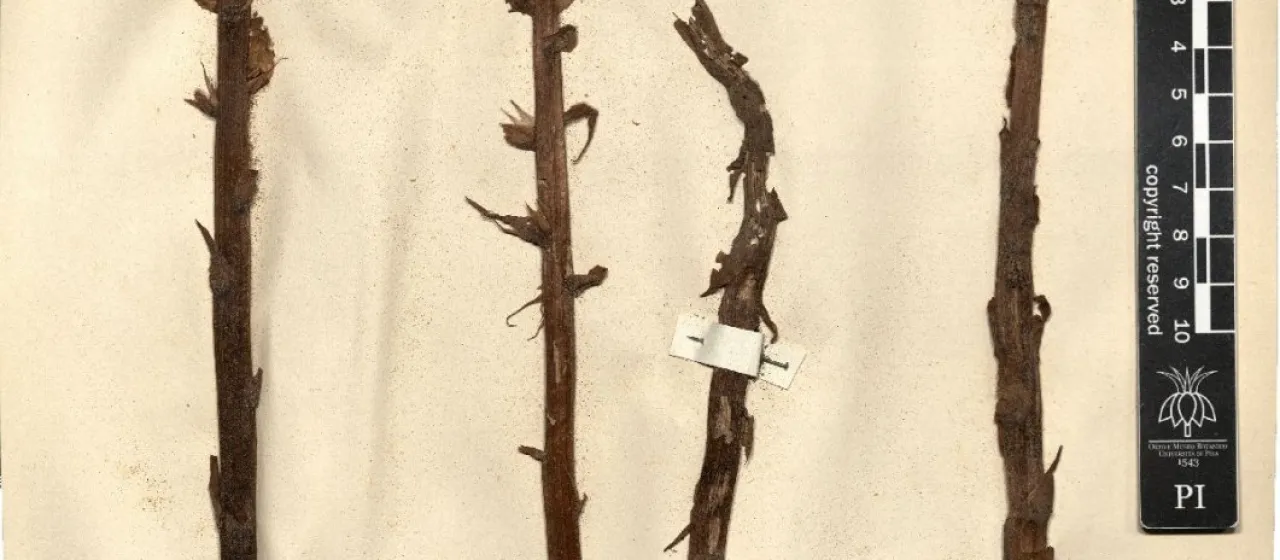
Description
Calendula broomrape (Orobanche calendulae) is an obligate parasitic flowering plant species belonging to the Orobanchaceae family. Unlike conventional crops, it lacks chlorophyll and has no photosynthetic capabilities, acting as a complete root parasite that extracts all necessary nutrients directly from the host plant.
The native distribution of this species is largely centered in the Mediterranean region, aligning with the ecological range of its primary host, Calendula. The evolutionary strategy of O. calendulae is highly specialized, relying on chemical triggers released by host roots that induce the germination of the parasite's microscopic seeds.
Botanically, the plant consists of a fleshy, unbranched stem covered in scale-like leaves. The plant remains subterranean for most of its life cycle, surfacing only when it produces a spike of flowers. Its subterranean root system has evolved into a specialized attachment organ known as a haustorium, which physically penetrates the vascular bundle of the host plant.
Its environmental requirements are dictated entirely by the host's needs. The species thrives in climates suitable for marigolds, preferring well-drained soils and high-sunlight exposure. Agricultural management of this species is critical in areas where Calendula is grown commercially, requiring strategies like crop rotation and soil sanitation to prevent the accumulation of the parasite's persistent seed bank.
From an agricultural standpoint, the species is considered a detrimental pest rather than a crop. It negatively impacts the productivity of marigold fields by competing for water and assimilates. Major issues associated with this plant include:
- significant reduction in biomass of the host plant;
- reduced yield of medicinal or ornamental flowers;
- increased susceptibility of the host to secondary pathogens;
- persistent seed bank viability in agricultural soils.
Photo gallery