Description
Orobanche canescens is a specialized parasitic plant species belonging to the Orobanchaceae family. It is a holoparasite, meaning it lacks chlorophyll entirely and relies exclusively on its host plant for carbohydrates, water, and essential nutrients. It attaches to the host's roots using specialized structures called haustoria.
The species is primarily found in arid and semi-arid regions of Eurasia, thriving in habitats where its typical hosts reside. Its natural distribution range includes dry steppes and saline lands. Being highly adapted to these harsh environments, it has developed mechanisms to survive prolonged droughts, often lying dormant in the soil for several years.
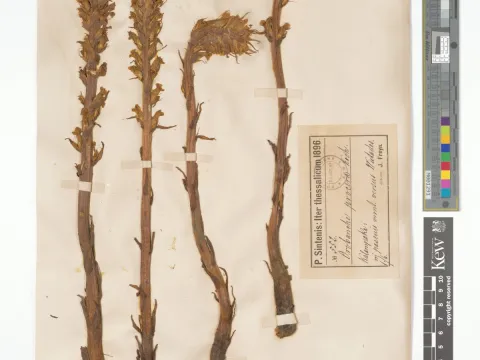
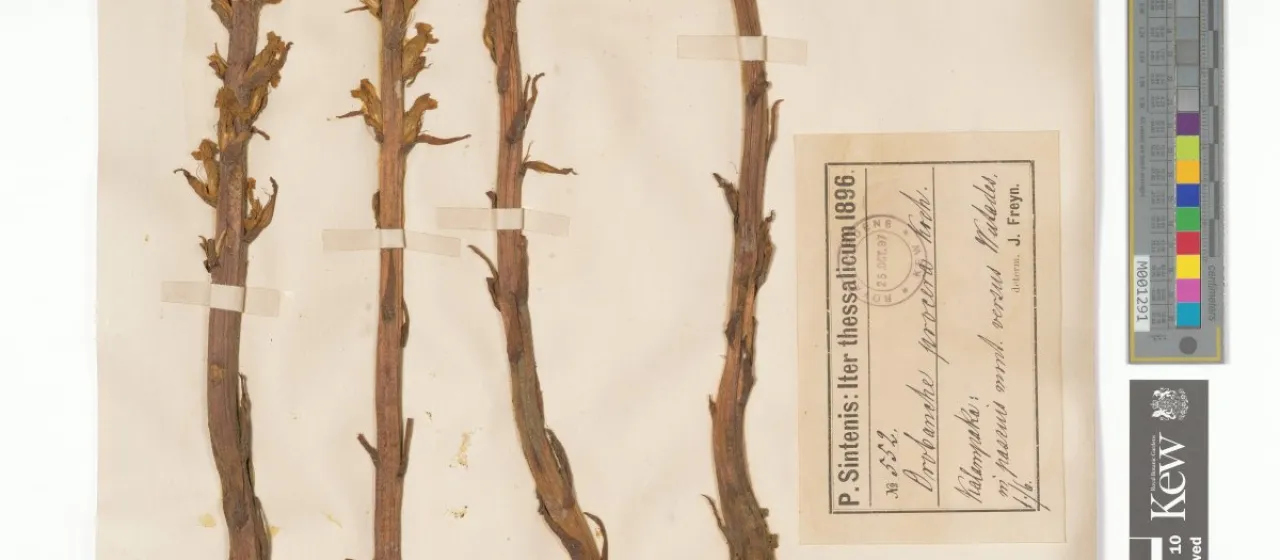
Botanically, Orobanche canescens features a fleshy, unbranched stem covered with scale-like leaves. The inflorescence is a dense spike with greyish-colored flowers, from which the plant derives its specific epithet. It produces a massive quantity of microscopic, dust-like seeds that can be easily transported by wind, water, and agricultural equipment.
From an agronomic perspective, this plant is considered a significant threat to agricultural productivity. Because it does not perform photosynthesis, it cannot be managed with standard herbicide applications intended for traditional weeds. Integrated pest management, including crop rotation with trap crops and the use of resistant plant varieties, is essential to mitigate its negative impact.
The economic impact of this parasite is entirely detrimental, as it drains resources from valuable crops, leading to stunted growth, reduced biomass, and significant yield losses. There is no positive хозяйственное use for Orobanche canescens. Effective management relies on preventing seed bank accumulation in the soil and ensuring strict monitoring of infested agricultural fields.
- Obligate root parasite
- Lacks chlorophyll and photosynthetic capability
- High reproductive output (seeds remain viable for years)
- Difficult to control due to underground life cycle
Photo gallery