Description
Yellow broomrape (Latin: Orobanche flava) is a parasitic plant species belonging to the family Orobanchaceae. As an obligate root parasite, it completely lacks chlorophyll and cannot perform photosynthesis. It derives all necessary water and nutrients from the host plant's root system by developing specialized organs called haustoria, which penetrate the host tissues to tap into the vascular bundles.
The origin of Orobanche flava is linked to the mountain regions of Europe, the Caucasus, and Asia Minor. Its natural distribution is restricted to specific habitats, typically found in damp and shaded areas such as stream banks, springs, and moist meadows. It is highly dependent on the presence of its host plants, which mainly include species from the Saxifragaceae family, particularly butterbur (Petasites).
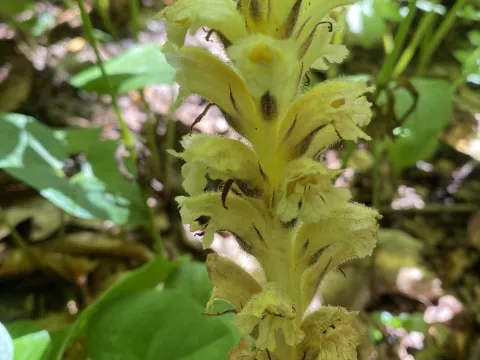
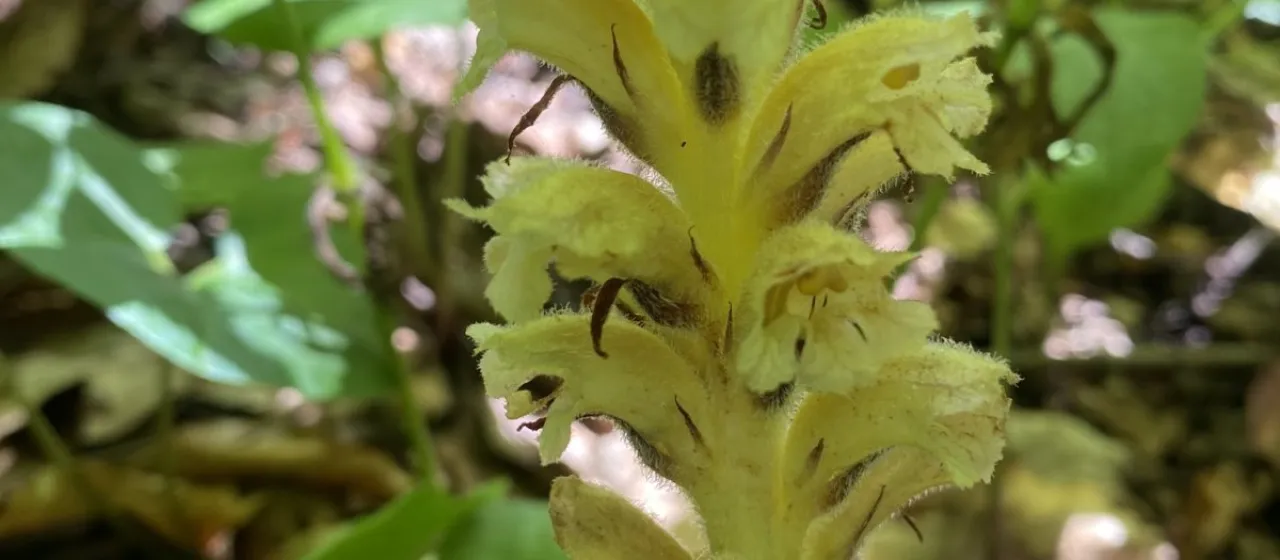
Botanically, yellow broomrape is a herbaceous, non-photosynthetic plant with a fleshy, yellowish-brown stem reaching up to 30 centimeters in height. The inflorescence is a dense, spike-like cluster of flowers that are distinctively colored. Its lifecycle is uniquely adapted for survival; it produces thousands of microscopic seeds that can remain dormant in the soil for extended periods, waiting for chemical signals from the host's roots to trigger germination.
From an agronomic perspective, this species is classified as a pest rather than a crop. While it does not commonly parasitize major grain crops, it can become a localized nuisance in nursery production, ornamental gardening, or when growing specific medicinal plants. The primary danger lies in its high reproductive capacity and the difficulty of eradicating the seed bank once it becomes established in the soil.
There is no industrial or commercial use for Orobanche flava; it is considered a botanical hazard in affected areas. Integrated management strategies include:
- Hand-pulling of the flowering stalks before seed production.
- Implementing deep plowing to bury the seeds and prevent germination.
- Avoiding the movement of soil or plant debris from infested areas.
- Utilizing crop rotation to break the lifecycle of the parasite.
Photo gallery