Description
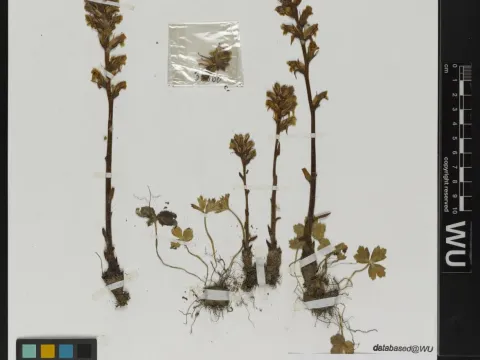
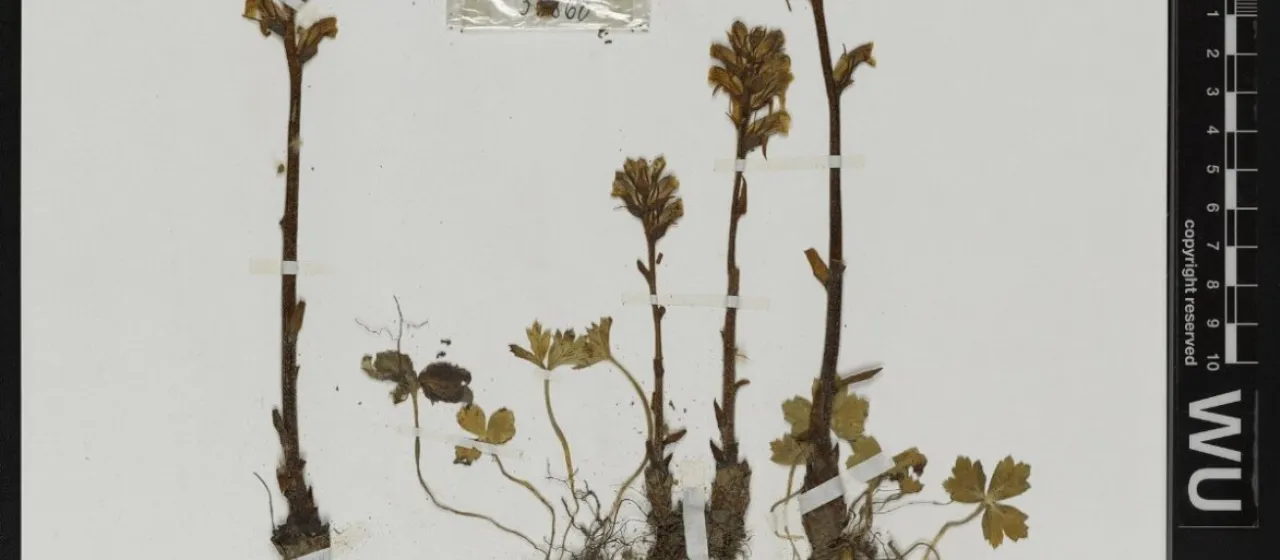
Grisebach's broomrape (Orobanche grisebachii) is a specialized parasitic plant within the Orobanchaceae family. As a holoparasite, it lacks chlorophyll entirely, which makes it incapable of photosynthesis. It survives by establishing a direct vascular connection to the roots of host plants, siphoning off water, minerals, and carbohydrates essential for its growth.
The native range of this species is primarily situated in Southeast Europe and the Balkan region. It has evolved to thrive in xeric habitats, including dry grasslands, steppes, and rocky terrains. Its distribution is closely linked to the presence of specific host plant species, which are typically found in arid or semi-arid ecological zones where these parasites successfully complete their life cycle.
Botanically, the plant is characterized by a fleshy, yellowish or brownish stem with scale-like leaves rather than true foliage. The inflorescence consists of dense racemes or spikes of tubular flowers. A single plant is capable of producing tens of thousands of tiny, dust-like seeds that can persist in the soil for many years, germinating only when triggered by chemical signals released by potential host roots.
Environmental requirements for Orobanche grisebachii include well-drained, sun-exposed soils and a warm climate. From an agricultural perspective, the management of this species is notoriously difficult because the parasite spends most of its life underground. Agronomic practices focus on preventing seed bank accumulation through rigid hygiene, resistant crop selection, and targeted field scouting during the flowering stage.
In farming, Grisebach's broomrape acts as a severe weed that significantly threatens agricultural yield. By siphoning nutrients, the parasite weakens the crop, leads to stunted growth, and in cases of high infestation, can cause total failure of the harvest. Integrated management plans, including the use of trap crops and chemical control, are essential to minimize the damage caused by this resilient parasitic species.
- Scientific Name: Orobanche grisebachii
- Plant Family: Orobanchaceae
- Life Strategy: Obligate Root Parasite
- Key Management: Crop rotation and seed hygiene
Photo gallery