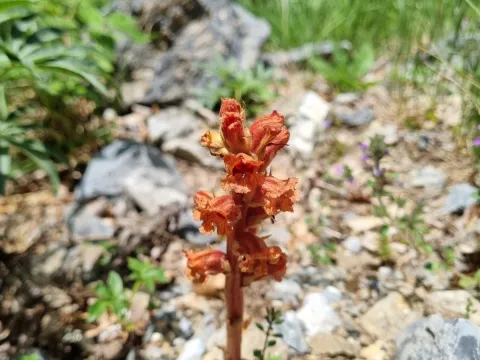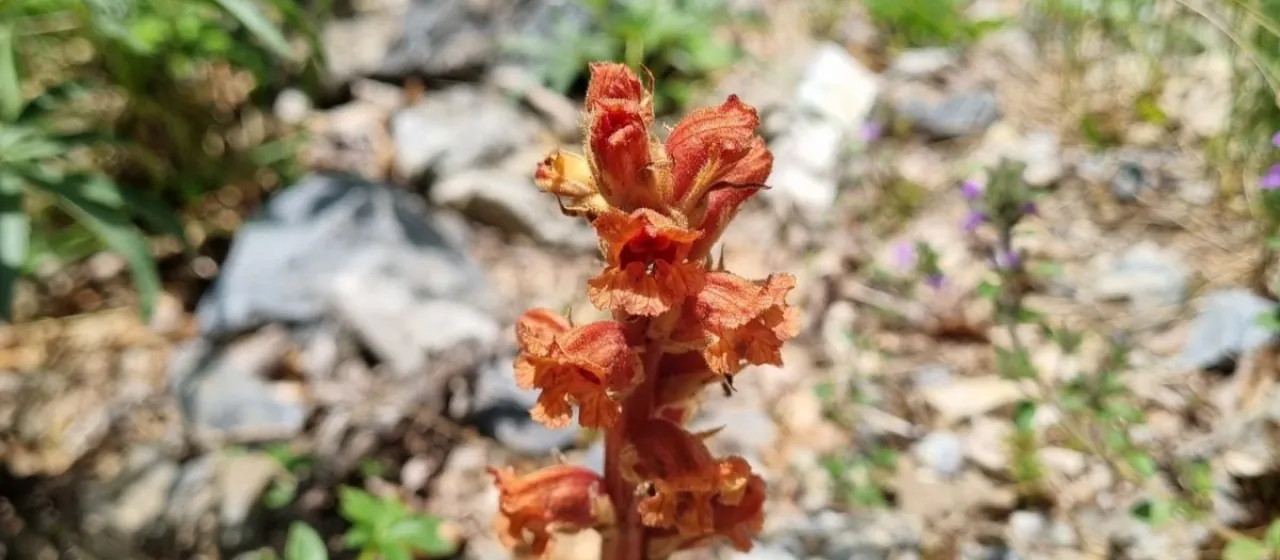
Description
Orobanche haenseleri is an obligate parasitic flowering plant belonging to the Orobanchaceae family. Unlike conventional crops, it is a specialized root parasite that lacks chlorophyll, meaning it cannot perform photosynthesis and relies entirely on extracting water, minerals, and carbohydrates from the root system of a host plant to survive and complete its life cycle.
The origin of this species is largely associated with the Mediterranean Basin and specific regions in Southern Europe. It thrives in habitats where suitable host plants are abundant. As an invasive and parasitic entity, its distribution is facilitated by the movement of contaminated soil, farm machinery, and the dispersal of its minute, dust-like seeds by wind and water across agricultural landscapes.
Botanically, Orobanche haenseleri manifests as a succulent stem lacking green pigmentation, usually appearing above ground only when flowering. Its floral structure consists of dense spikes of individual flowers that can produce a vast quantity of seeds. These seeds are known for their extreme longevity in the soil, entering a state of dormancy until they detect the specific chemical cues secreted by the roots of a susceptible host plant.
Climatic and soil requirements are strictly linked to the host's environment. The parasite prefers well-drained, warm soils that facilitate the rapid germination and connection of the haustorium (the organ used to penetrate the host's root tissue). In agronomic terms, managing this parasite is complex because it remains underground for the majority of its life, rendering traditional foliar herbicides ineffective.
The economic impact of Orobanche haenseleri is severe, as it causes significant reductions in crop yield and biomass by diverting essential resources away from the host. Strategies to mitigate its impact focus on integrated pest management (IPM), including long-term crop rotation, the use of resistant crop varieties, and soil solarization or chemical fumigation in highly infested areas to deplete the soil seed bank.
Photo gallery