Description
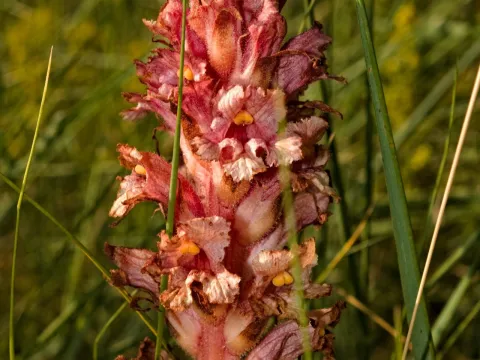
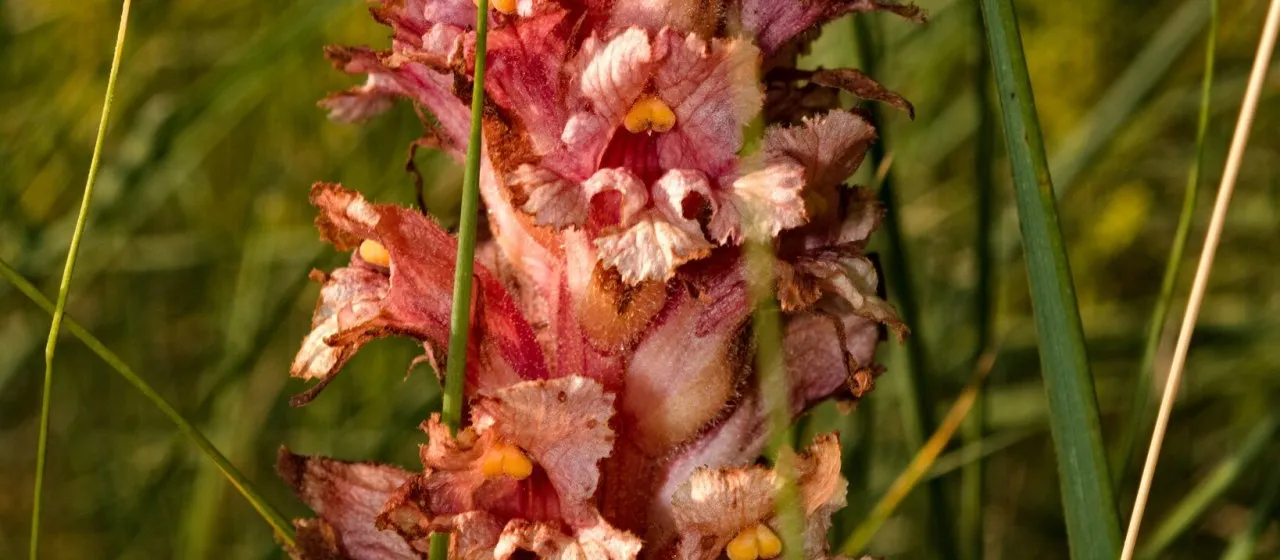
Koch's broomrape (Orobanche kochii) is a parasitic herbaceous plant belonging to the Orobanchaceae family. Within an agronomic context, it is not a cultivated crop but rather a highly destructive root parasite that poses a significant threat to agricultural productivity by tapping into the nutrient and water supply of host plants.
The origin and distribution of this species are primarily linked to the steppe and forest-steppe ecosystems of Eurasia. It thrives in regions where susceptible host plants are present. Since the plant lacks chlorophyll, it is entirely incapable of photosynthesis and must rely on parasitic mechanisms to survive and complete its life cycle within the agricultural environment.
Botanically, Koch's broomrape is distinguished by its fleshy, upright stem and the absence of green leaves. Its root system is modified into specialized organs known as haustoria, which penetrate the host's vascular tissue. The plant produces dense inflorescences containing tiny, dust-like seeds that can remain viable in the soil for several years, making infestation difficult to eradicate.
Agronomic requirements for managing this parasite center on prevention and control. Because the seeds are soil-borne, effective crop rotation is essential, specifically including non-host crops. Furthermore, soil management practices that disturb the life cycle of the parasite are recommended. In some cases, specific chemical treatments or the breeding of resistant plant varieties are used to mitigate economic losses.
There is no positive agricultural use for Koch's broomrape; it is strictly categorized as a weed that causes severe economic damage. Common issues include significant yield loss, reduced plant vigor, and increased production costs due to the need for continuous monitoring and control measures. Integrated pest management strategies are the standard approach for dealing with its impact on field crops.
- Classification: Obligate root parasite
- Biological group: Orobanchaceae
- Reproduction: Seed-based, high dispersal capacity
- Management: Integrated pest management (IPM)
Photo gallery