Description
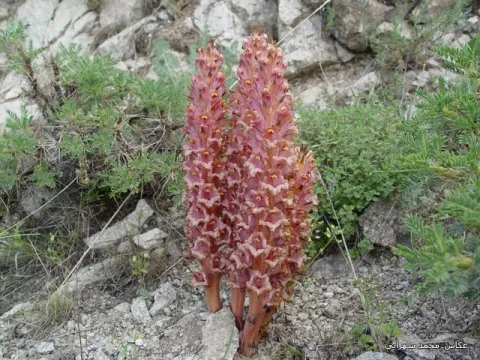
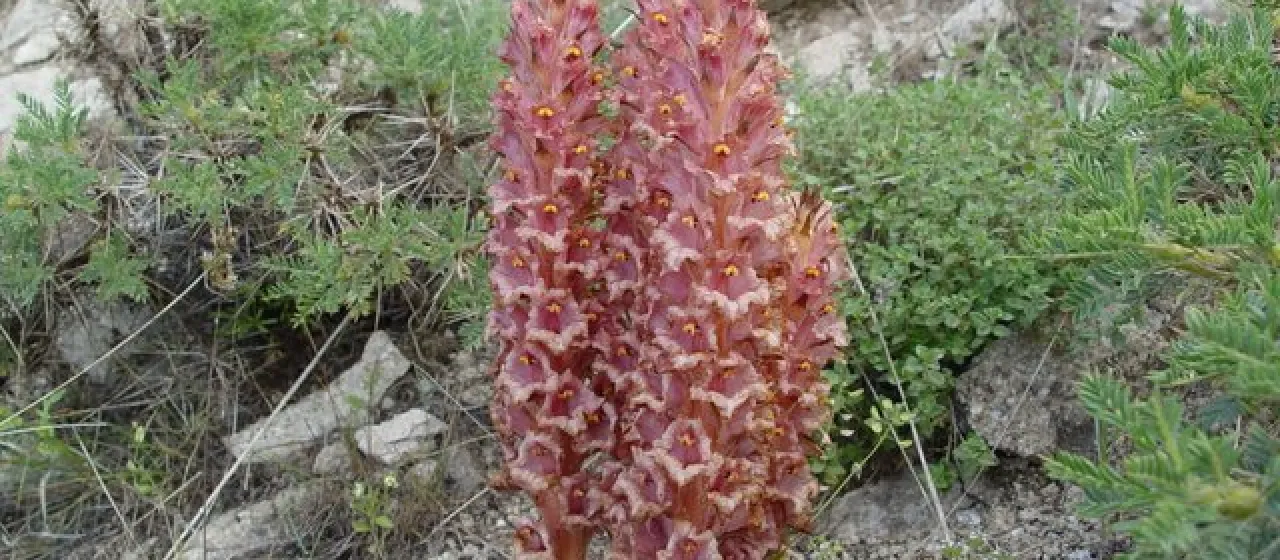
Kurdish broomrape (lat. Orobanche kurdica) is a parasitic flowering plant belonging to the Orobanchaceae family. It is not an agricultural crop in the traditional sense; rather, it is a specialized root parasite that completely lacks chlorophyll. Consequently, it relies entirely on the nutrients, water, and carbohydrates extracted from a host plant's root system to complete its life cycle.
The native range of this species is primarily located in the Middle Eastern region, specifically within the Kurdish territories. It has evolved to thrive in semi-arid environments where it interacts with host species by sensing chemical signals (strigolactones) released by the roots of nearby plants, which triggers the germination of its dormant seeds within the soil profile.
Botanically, Orobanche kurdica displays a characteristic spike-like inflorescence that emerges from the soil surface once the parasitic connection with the host is well-established. The plant body consists of a fleshy, yellowish-brown stem devoid of green foliage. Its primary anatomical adaptation is the development of haustoria, which penetrate the vascular bundle of the host roots to facilitate nutrient transfer.
Agronomic management of this parasite is challenging and relies heavily on integrated pest management (IPM) strategies. Because the seeds are incredibly persistent and can remain viable in the soil for years, agricultural practices must focus on reducing the soil seed bank. This is achieved through long-term crop rotation, the use of trap crops that stimulate germination without allowing attachment, and rigorous weed hygiene.
From an agricultural standpoint, Kurdish broomrape is considered a highly damaging weed that causes significant yield losses and reduces the overall economic viability of infected land. It provides no economic utility and must be managed as a serious biological threat. Key control measures include:
- Preventing seed dispersal through farm machinery sanitation.
- Selecting resistant crop varieties or cultivars.
- Chemical control using selective herbicide applications.
- Deep plowing to bury seeds deeper than their viable germination depth.
Photo gallery